What is Social Anxiety Disorder?
A comprehensive overview of symptoms, types, and treatment options.
Symptoms
Anxiety gives a strong feeling of fear, and that you cannot control what is happening to you. Sometimes you may experience it as if the anxiety comes completely suddenly and without warning. Physically, anxiety can be felt by getting palpitations, trembling, breathing difficulties, or thinking you are going to faint or throw up.
Diagnosis
An anxiety diagnosis does not have to be a "lifelong companion". Many people have one or more anxiety experiences during their lives, but some live with it and learn techniques to dampen the symptoms. A diagnosis can be helpful if you have a reduced level of functioning for periods, that is, if you have to be away from work or do not function in what you usually do.
Anxiety and related conditions
Social anxiety means feeling discomfort or anxiety when meeting other people. It can also be that you only have anxiety when meeting specific groups of people or in specific situations.
Specific phobias mean that you are, for example, afraid of spiders, flying, birds, or great heights. The fear is so strong that you make an effort to avoid what creates fear, and you can become inhibited in your daily life.
Panic anxiety means getting palpitations and sweating. Many become afraid of fainting, suffocating, or dying. The fear of new attacks can make you isolate yourself at home.
Agoraphobia means being afraid to leave home and move out into areas that you perceive as unsafe, especially open spaces and places with many people.
Generalized anxiety disorder means excessive worries about everyday events. In addition, you often have a lot of muscle tension and inner unrest.
Obsessive-compulsive disorder (OCD), now classified in its own group rather than as an anxiety disorder, though anxiety drives it, involves getting unwelcome and unpleasant thoughts or images in your head. Rituals or compulsions are used to chase away the thoughts and images. Many feel shame related to the obsessive thoughts.
Post-traumatic stress disorder (PTSD), now classified among trauma- and stressor-related conditions, arises as a reaction to a psychologically painful event or many strains over a long time. "Flashbacks" or nightmares where you relive the painful event are common, as is avoidance of the place where the experience took place. Other symptoms are tension, jumpiness, anger, and sleep problems.
Health anxiety, called hypochondria in older texts, is excessive worry about illness. Characteristics are persistent preoccupation with the possibility of having serious bodily (somatic) illnesses.
Treatment
There are several treatment methods for anxiety disorders. It is important that you find a type of treatment that suits you, and that you actively participate in the process yourself. You have to work on facing the situations that create anxiety for you. Some manage this on their own, while others need help from a therapist. Talk to your GP about how you can get the best help.
Treatment for anxiety can be separate training programs where you "expose" yourself to what gives you anxiety. This is called exposure therapy. Such treatment can also be combined with talk therapy. Through this form of treatment, you and the therapist will collaborate to break the thought patterns that help maintain the problems.
What the treatment actually looks like
Social anxiety is one of the conditions we know the most about how to treat. Cognitive behavioural therapy with exposure is recommended as a first-line treatment in international guidelines, meaning it is what you should normally be offered first.
Exposure is the most misunderstood word in this whole field. It does not mean throwing yourself at the thing you dread and hoping you survive. It means sitting down with a therapist, writing out the situations that frighten you, putting them in order from mildly uncomfortable to almost unthinkable, and then starting near the bottom. You agree on the step. You agree on when. You do it, you both look at what actually happened, and only then do you move up. Gradual, planned, at a pace you have agreed to. That is the whole method.
It is also not endurance training. Cognitive therapy sets exposure up as an experiment: before you go in, you say what you think will happen, they’ll see my hands shaking and think there’s something wrong with me, and afterwards you check that prediction against what actually happened. Finding out that the predicted disaster did not arrive is called expectation disconfirmation, and it is understood to be a main reason exposure works. In a review of anxiety-disorder trials, exposure and cognitive therapy worked about equally well for panic, PTSD and OCD, while for social anxiety cognitive therapy did somewhat better (Ougrin, 2011). Either way, approaching what you avoid seems to do a great deal of the work.
One thing worth knowing before you start: safety behaviours. These are the small, almost invisible things you do to get through, gripping the glass so nobody sees your hand shake, rehearsing every sentence in advance, standing where you can leave, keeping your coat on. They feel like the reason you survived the situation. The trouble is what they do afterwards. When it goes fine, you don’t get to conclude it went fine; you conclude it went fine because I held the glass like that. The evidence never quite lands. In treatment you will often be asked to try the same situation both ways, once with the safety behaviour, once without, and compare.
Underneath social anxiety there is usually a rule you have been living by, one you most likely never chose on purpose. Cognitive therapy works with these rules directly, and it is gentler than people expect: you don’t argue with the rule, you weigh it. Here is a worked example from a Norwegian self-help book based on cognitive therapy (Hougaard & Arendt, 2017):
The rule
“I must do everything perfectly, even small mistakes are unforgivable.”
What it gives me
- It pushes me to make an effort
- I get to be ambitious
- Other people don’t find fault with me
- It props up my self-esteem when I succeed
What it costs me
- I can’t always live up to it
- Small setbacks feel like personal failure
- It leaves me exposed in social situations
- The rule keeps the social anxiety going
A rule I could live by instead
“Small mistakes are small. And it’s OK to be nervous.”
Look at what happens in that last line. The new rule is not the opposite of the old one, and it is not I don’t care what anyone thinks, nobody genuinely believes that about themselves. It is a smaller, more honest version of the old rule, with room in it for being nervous. That is usually what a rule you can actually live by looks like.
External Resources & Videos
About that series. Magnus Nordmo is a Norwegian psychologist, and this is a free self-help series he has made and published himself, it walks through cognitive behavioural therapy for social anxiety, step by step, in Norwegian. It is his work, not ours; we are pointing you to it.
INTERNATIONAL RESOURCES
NHS (UK), a plain-language overview of social anxiety, symptoms and treatment.
NIMH (US), the National Institute of Mental Health on social anxiety disorder: signs, treatment and how to find help.
Anxiety & Depression Association of America, find a therapist, free webinars and support groups.
findahelpline.com, free, confidential helplines listed by country, if you need to talk to someone today.
WHEN THE ROOM FEELS LIKE A TEST
The hardest part is often not the room. It is the hour afterwards.
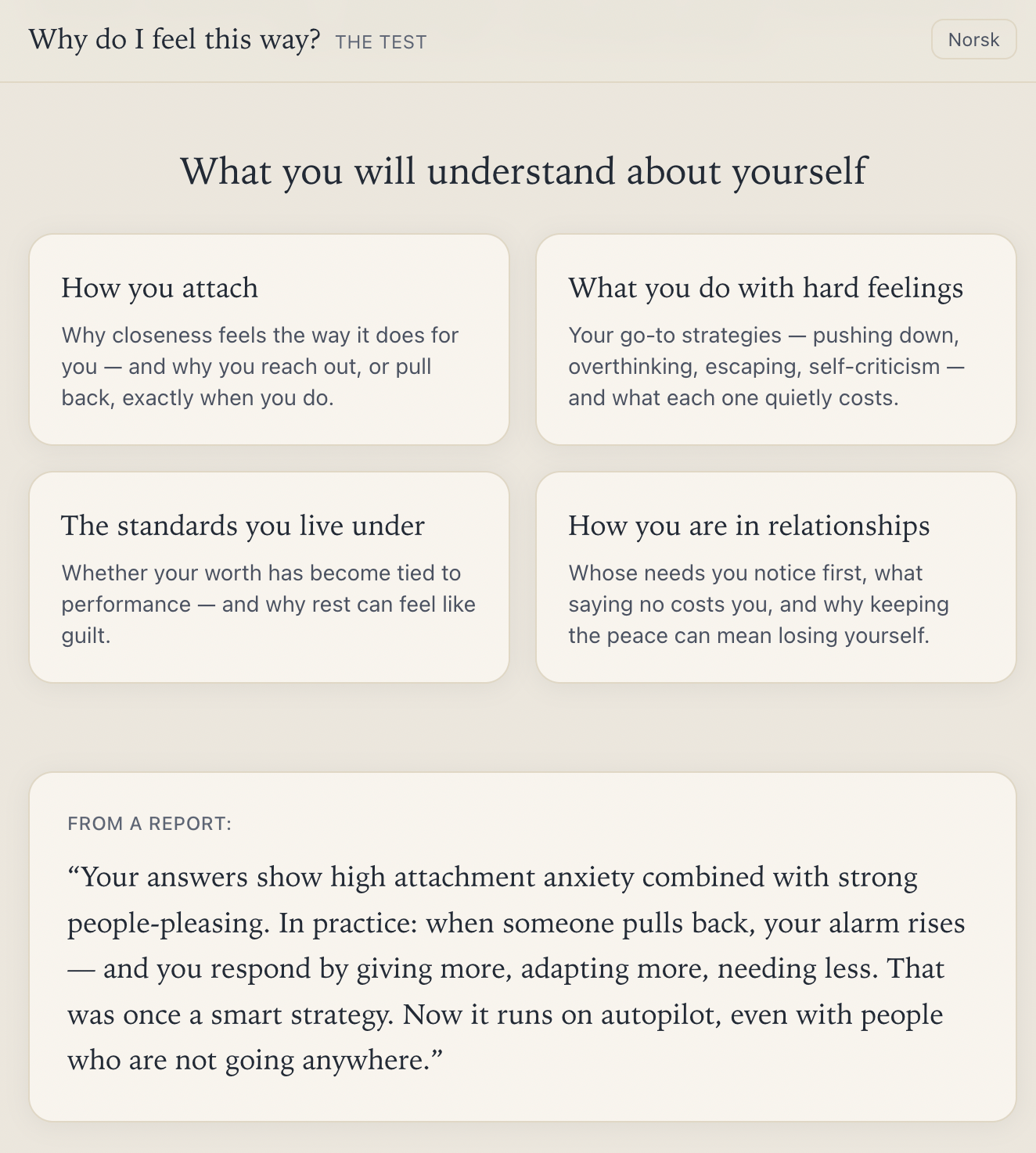
Social anxiety keeps its grip through what happens after the room, not inside it: the replay starts on the way home, you scan the conversation for the thing you got wrong, and because a scan like that always finds something, the next invitation quietly gets a no, and every time you avoid, the relief that follows teaches the brain, correctly and very unhelpfully, that the room really was dangerous, which is why the world gets narrower the better you manage it. You are the person who performs perfectly well in the room, the one nobody would ever guess this about, and you are also the only one who knows what it costs to be that person. The Emotion Regulation Course is where the replay gets taken apart, what the after-the-event scanning is actually doing, why relief is the thing keeping it alive, and what to practise instead while the discomfort is still in the room with you, written out of 8 years and 4,500 clinical hours.
WHAT IS INSIDE
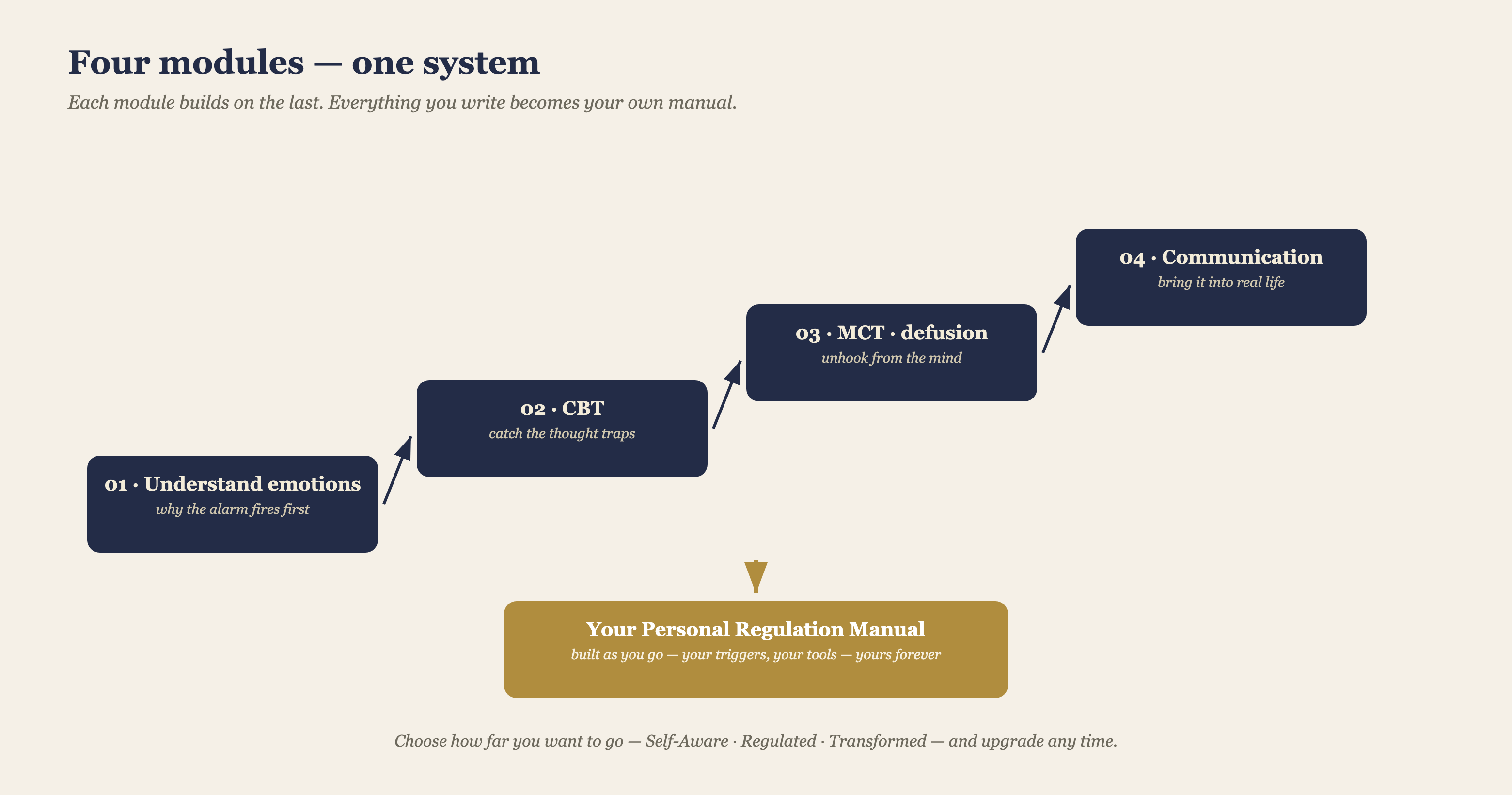
Module 1: Understanding Emotions, 59 lessons · 5 parts
Module 2: CBT Thought Patterns, 28 lessons
Module 3: MCT Thought Defusion Techniques, 32 lessons
Module 4: Communication in Real Life, 44 lessons
From $297 · one-time payment · instant access. Education, not treatment for an anxiety disorder.
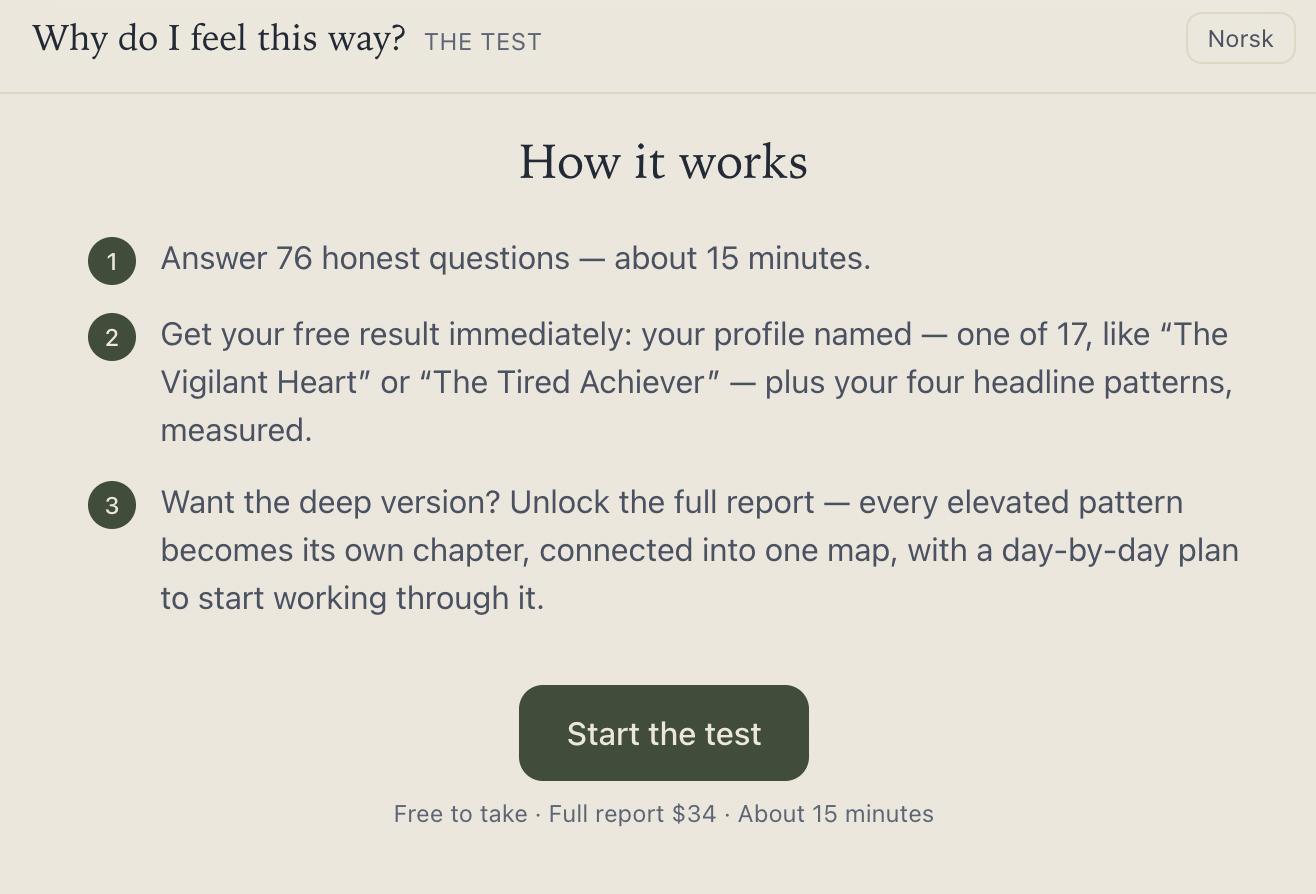
Want to understand more about why you feel this way?
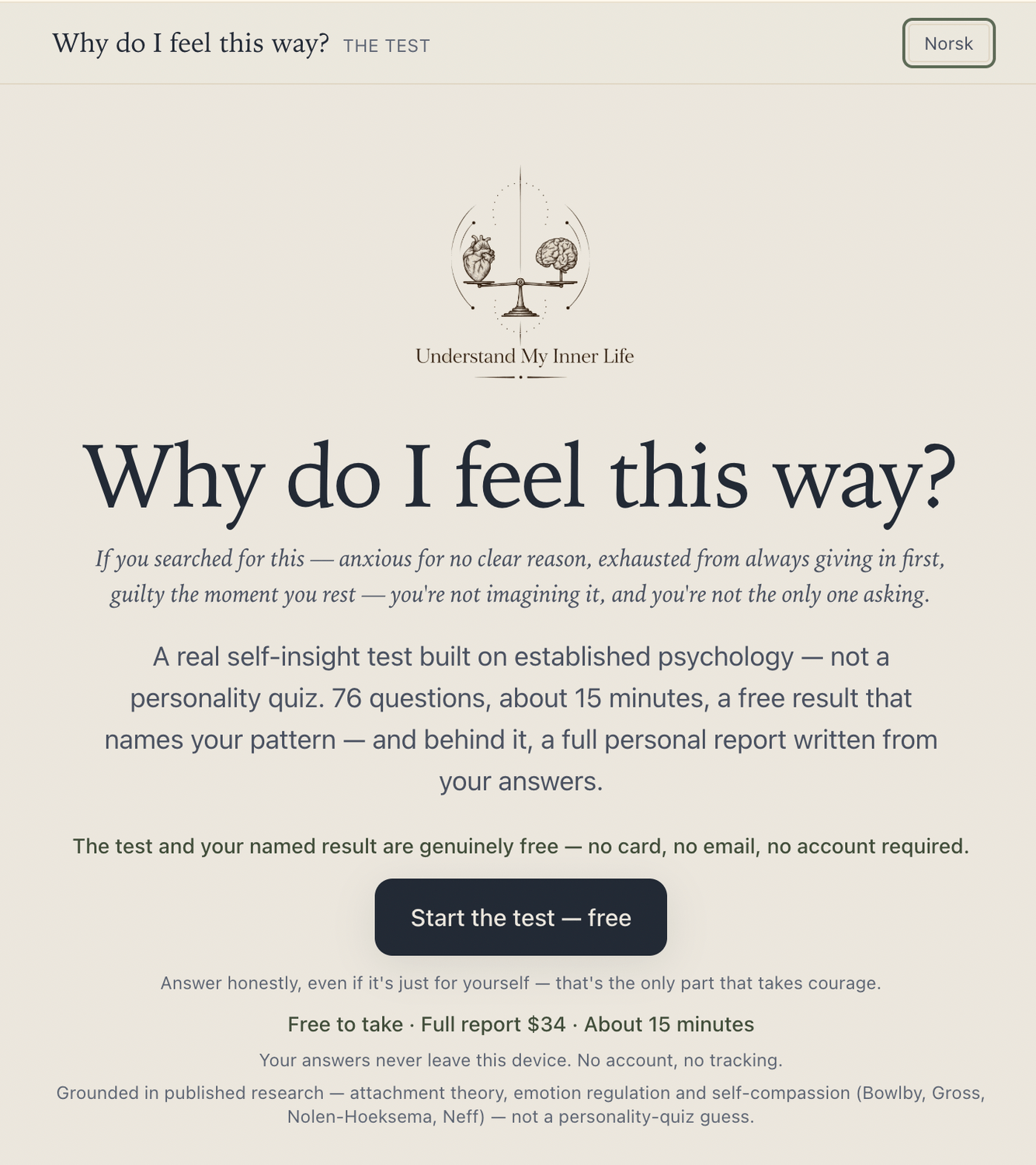
Start with the 15-minute test ($27). It names your pattern and shows you exactly where to begin.
Not ready to commit?
Free workbooks to keep
Downloadable PDFs you can use right now. Fill them out, print them, share them, they're yours.
- Your First Three Tools
- The Anxiety Decoder
- The Overthinking Off-Ramp
- The Resilience Field Guide
- The Self-Worth Reset
- The Anger Compass
- The Boundary Blueprint
- The Armour Audit
- The Decision Untangler
- The True-Self Map