
What is ADHD?
Understanding Attention Deficit Hyperactivity Disorder: Symptoms, Diagnosis, and Management.
ADHD stands for Attention Deficit Hyperactivity Disorder. The letters describe the core symptoms: attention deficit and hyperactivity. There can be several causes for the condition. Heritability plays a large part, but genes are not the whole story, how ADHD develops, and how much it affects daily life, also depends on environment and circumstances.
Between three and five percent of children and young people under 18 in Norway have an ADHD diagnosis. That equates to about one student in every school class. The largest increase in the number of diagnosed individuals is found among the adult population, with an estimated 120,000 adults in Norway living with ADHD.
It is not uncommon to have co-occurring conditions such as Tourette's syndrome, reading and writing difficulties, depression, anxiety, and more.
Recognizing the Symptoms
Symptoms of ADHD can vary and appear to different degrees from person to person. However, common traits include:
Difficulty concentrating or focusing on one thing at a time
High impulsivity (doing or saying things without thinking)
Difficulty waiting for one's turn
High physical activity or restlessness
ADHD in Girls vs. Boys
Girls may exhibit less hyperactivity than boys. This can make ADHD harder to detect in girls. Naturally, both restlessness and concentration difficulties are a demanding combination for school or work, making it difficult to learn or function optimally.
Diagnosis and Treatment
- Getting a diagnosis
There are no simple tests that can give a definitive "ADHD" answer. A diagnosis is based on whether the symptoms have persisted over time and whether they cause significant impairment at school, work, or home. The diagnosis must be made by a specialist after a thorough assessment. The goal of a diagnosis is to get the right treatment, a diagnosis alone is not "enough."
Treatment for Children
Families should be offered family counseling or parent training programs. Schools and kindergartens are responsible for implementing pedagogical measures. Treatment must be individually adapted and evaluated over time. Some may need an Individual Plan.
Treatment for Adults
Get to know yourself and learn what you can do to live well with ADHD. Regular physical activity helps reduce restlessness. Talk to your doctor about talk therapy. Medication can also be helpful for some adults.
Everyday Coping Strategies
- Make a list of tasks to be solved every day
- Check off each time you have solved a task
- Do one thing at a time
- Take regular short breaks
- Create routines in everyday life
- Get up and go to bed at about the same time every day
* Coping strategies sourced from Helsebiblioteket.no
Make Positive Feedback Immediate
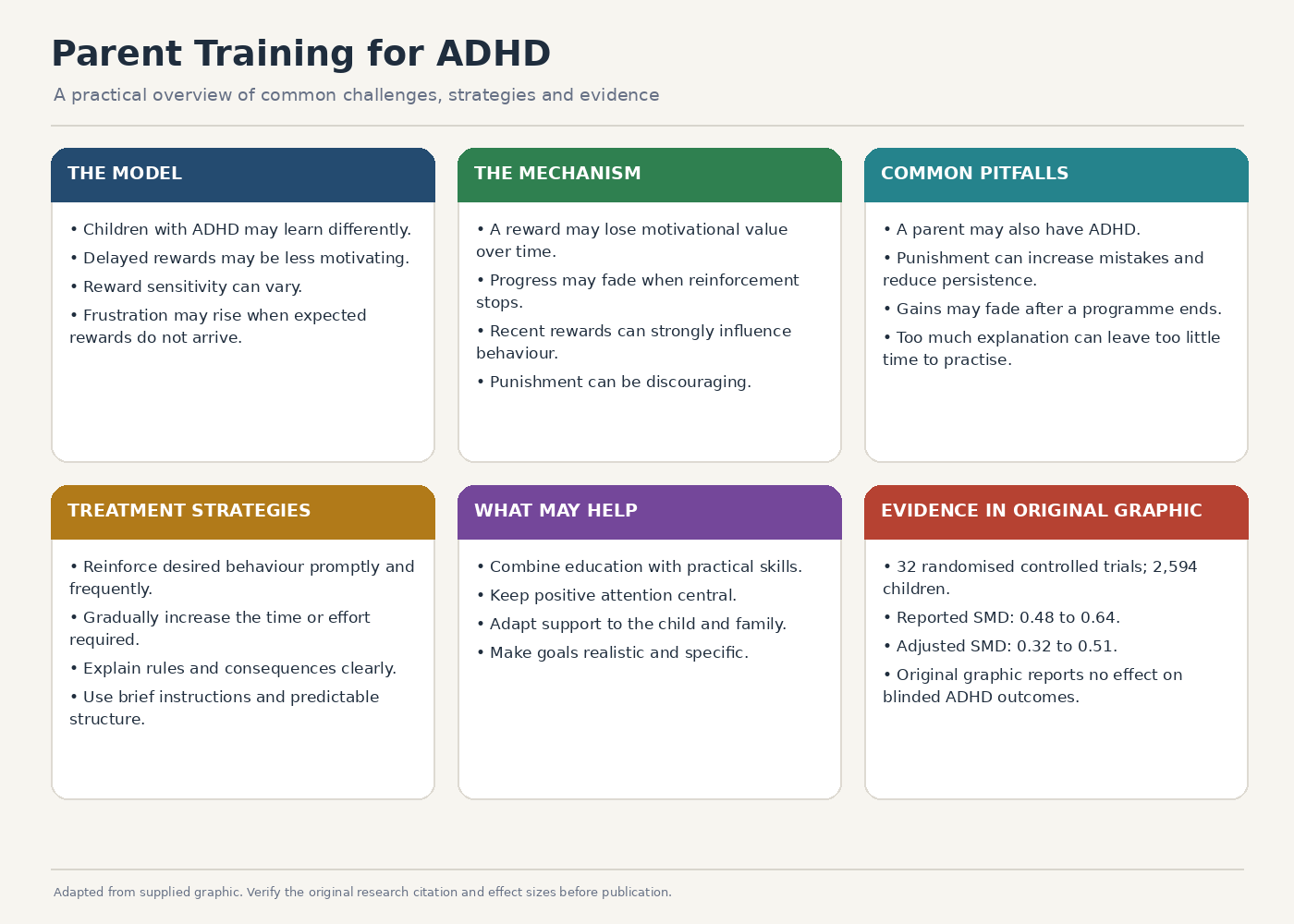
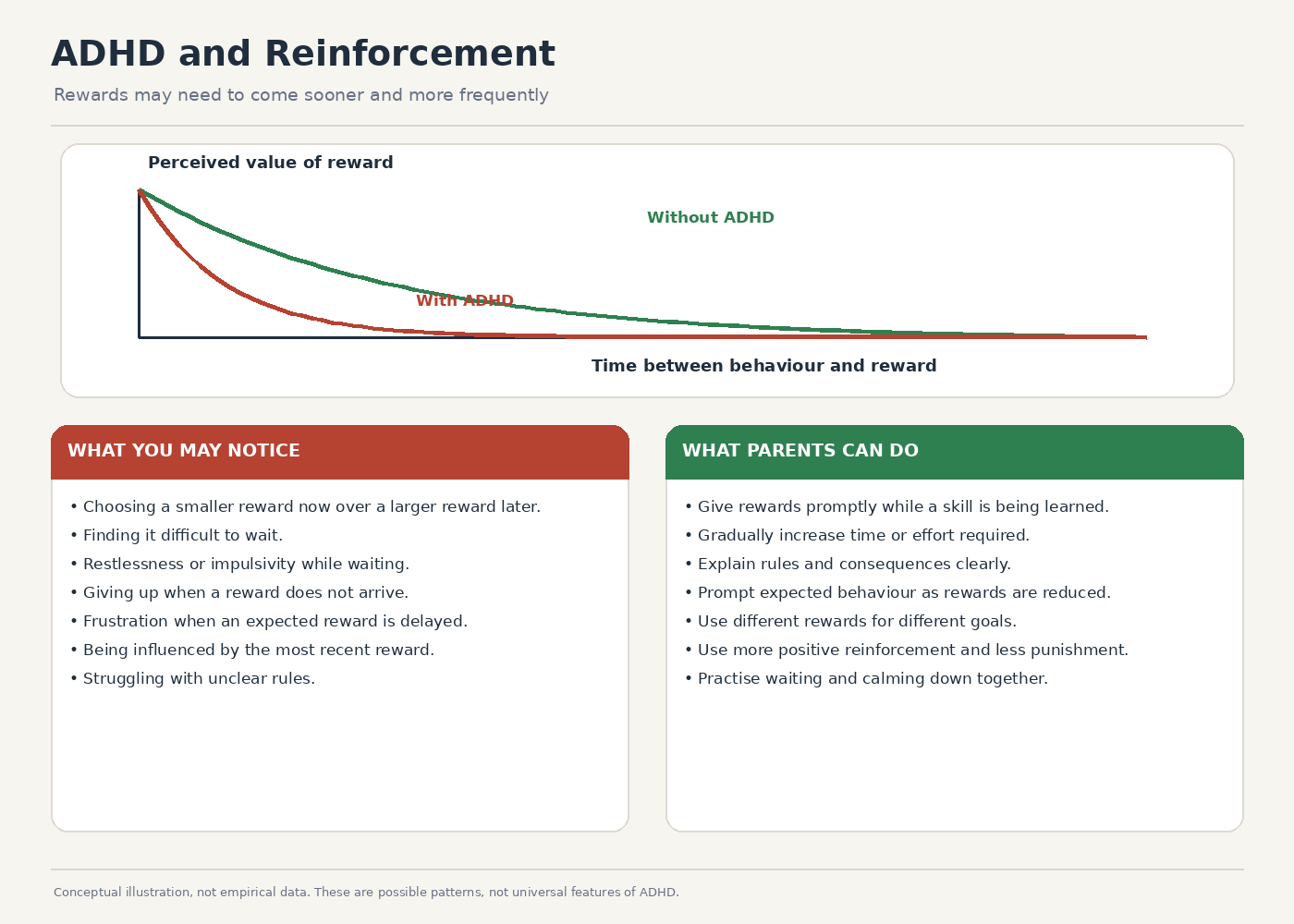
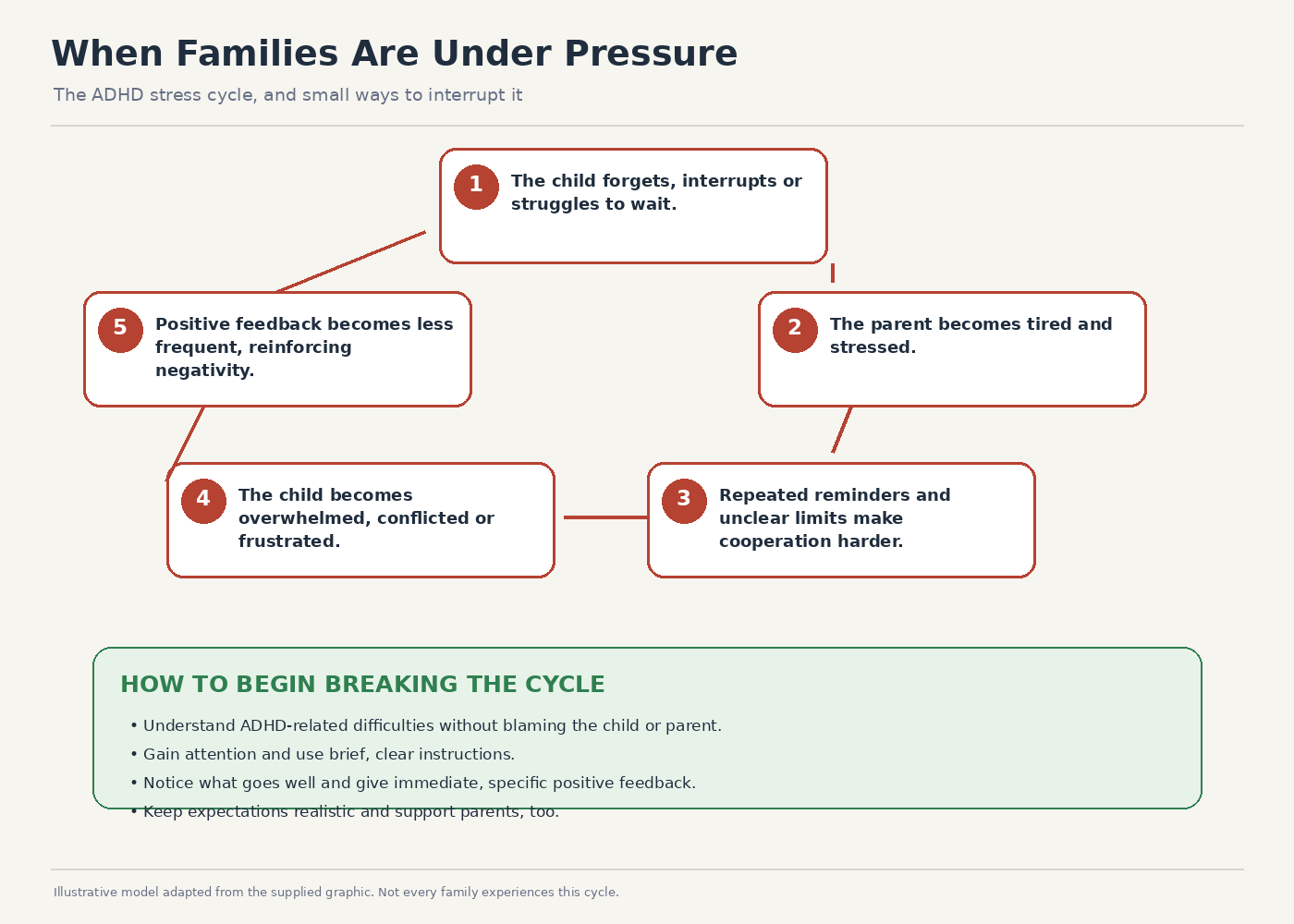
Children with ADHD may respond more effectively to immediate rewards than to rewards that are delayed. When a child is learning a new skill, acknowledge effort and progress as soon as possible.
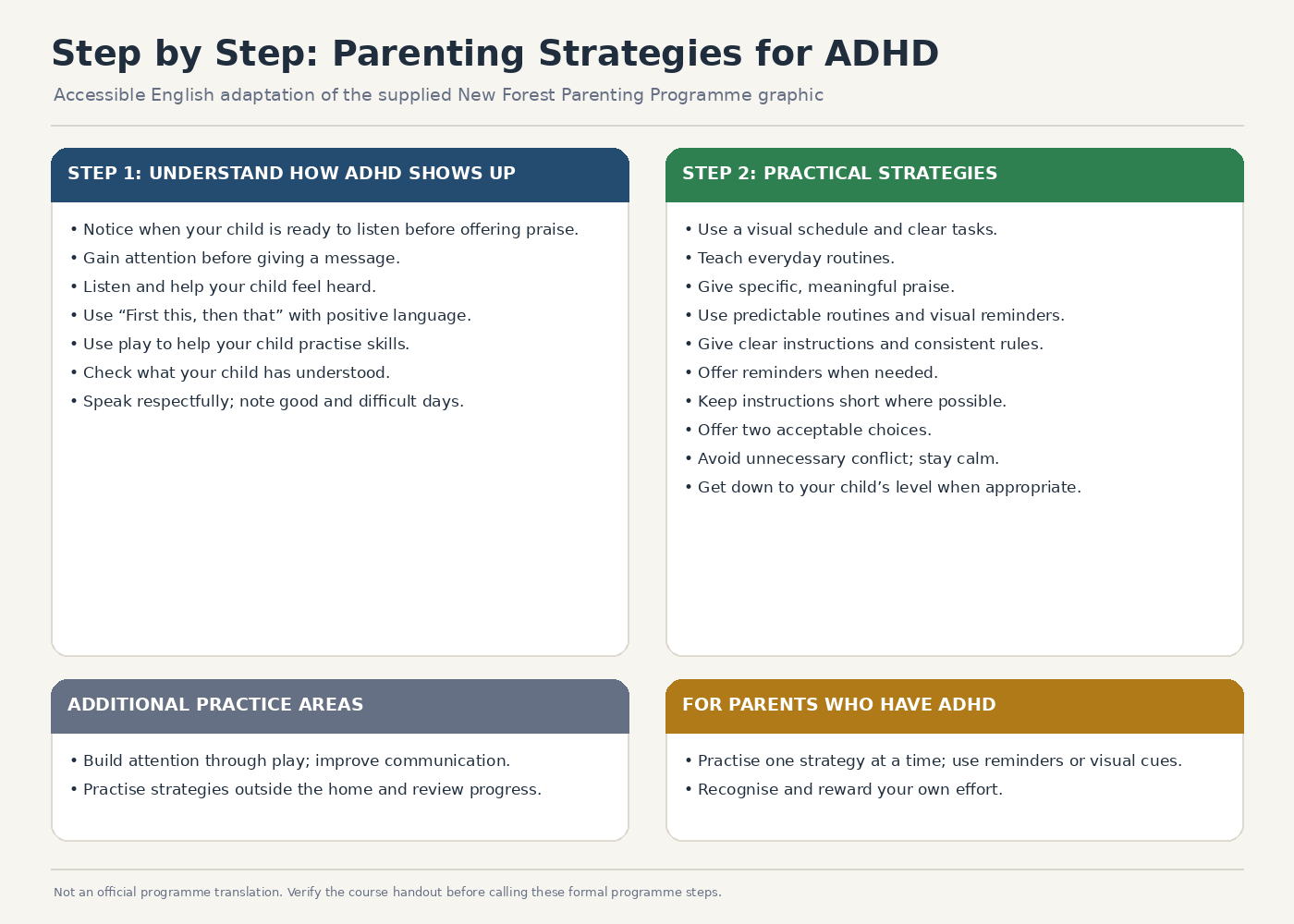
Try this: Give specific, encouraging feedback immediately after the desired behaviour.
Make Expectations Clear and Concrete
Unclear rules and changing expectations can make it harder for children to understand what is expected of them. Clear instructions, predictable routines and reminders can help guide behaviour.
Try this: Explain what the child should do, when to do it, and what comes next.
Break New Skills Into Manageable Steps
Learning a new behaviour may require frequent reinforcement and repeated practice. Start with achievable steps and gradually build toward the larger goal.
Try this: Recognise small steps of progress instead of expecting perfect performance from the beginning.
Build Structure and Reduce Distractions
The environment can influence behaviour. Visual cues, consistent routines and fewer competing distractions may make expected behaviours easier to remember and perform.
Try this: Use a simple checklist, visual reminder or predictable routine for challenging situations.
Prepare for Frustration and Delays
Some children with ADHD may become frustrated when an expected reward does not arrive or when they have to wait. Adults can help by preparing children for delays and teaching practical ways to manage frustration.
Try this: Explain what to expect, make waiting periods more manageable, and support the child in practising coping strategies.
Prioritise Encouragement Over Punishment
Punitive responses may have unwanted effects, including frustration and missed learning opportunities. Reinforcing alternative, appropriate behaviours may be a more constructive starting point. If consequences are used, monitor the child's emotional response carefully.
Try this: Notice and encourage the behaviour you want to see, while responding calmly and consistently to difficulties.
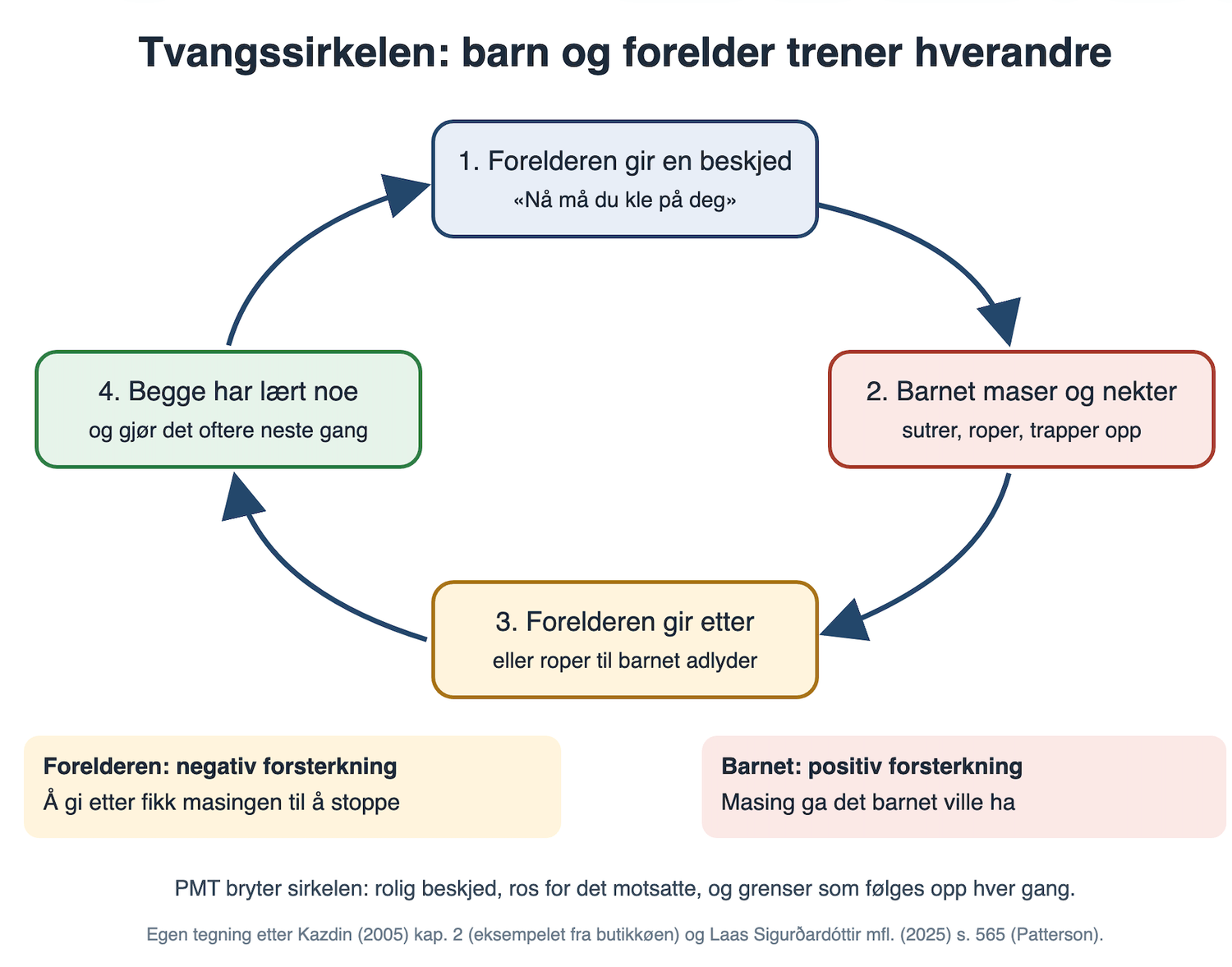
A key reminder: Children with ADHD are not all the same. Strategies should be adapted to each child's needs, context and responses, ideally with guidance from qualified professionals.
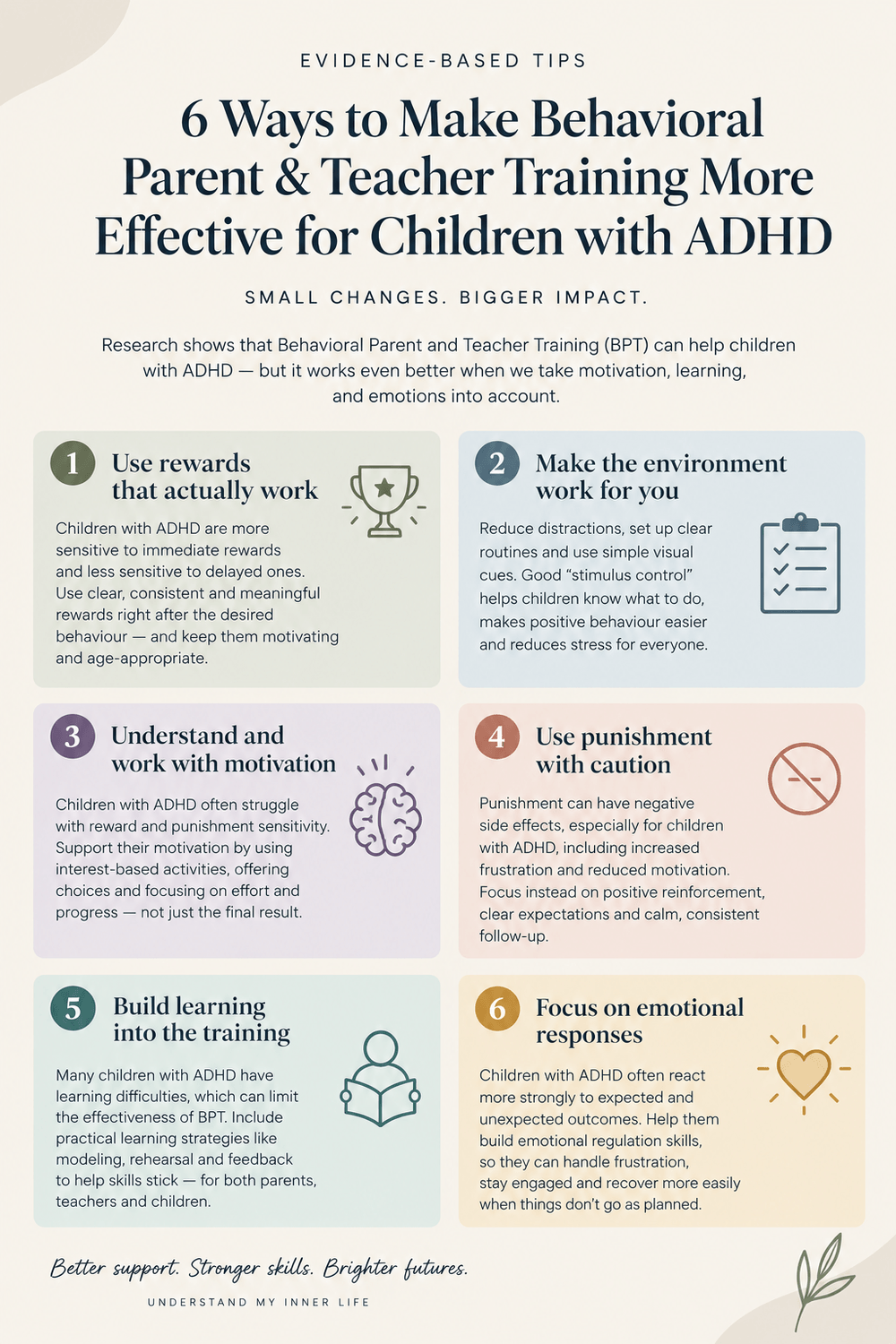
Based on van der Oord, S., & Tripp, G. (2020). “How to Improve Behavioral Parent and Teacher Training for Children with ADHD: Integrating Empirical Research on Learning and Motivation into Treatment.” Clinical Child and Family Psychology Review, 23, 577–604. https://doi.org/10.1007/s10567-020-00327-z
* Strategies sourced from Sciencedirect To Download the PDF, click here
A Note on Medication
Most medicines for ADHD are central stimulants (methylphenidate or amphetamine-based medicines). Atomoxetine is a non-stimulant option. They reduce symptoms for many people, and a majority of children and young people who respond to them function better in school situations.
However, medication doesn't work for everyone, and long-term effects are less known. Regular follow-up is crucial to monitor effects and side effects. Medication alone is rarely enough as a standalone treatment.
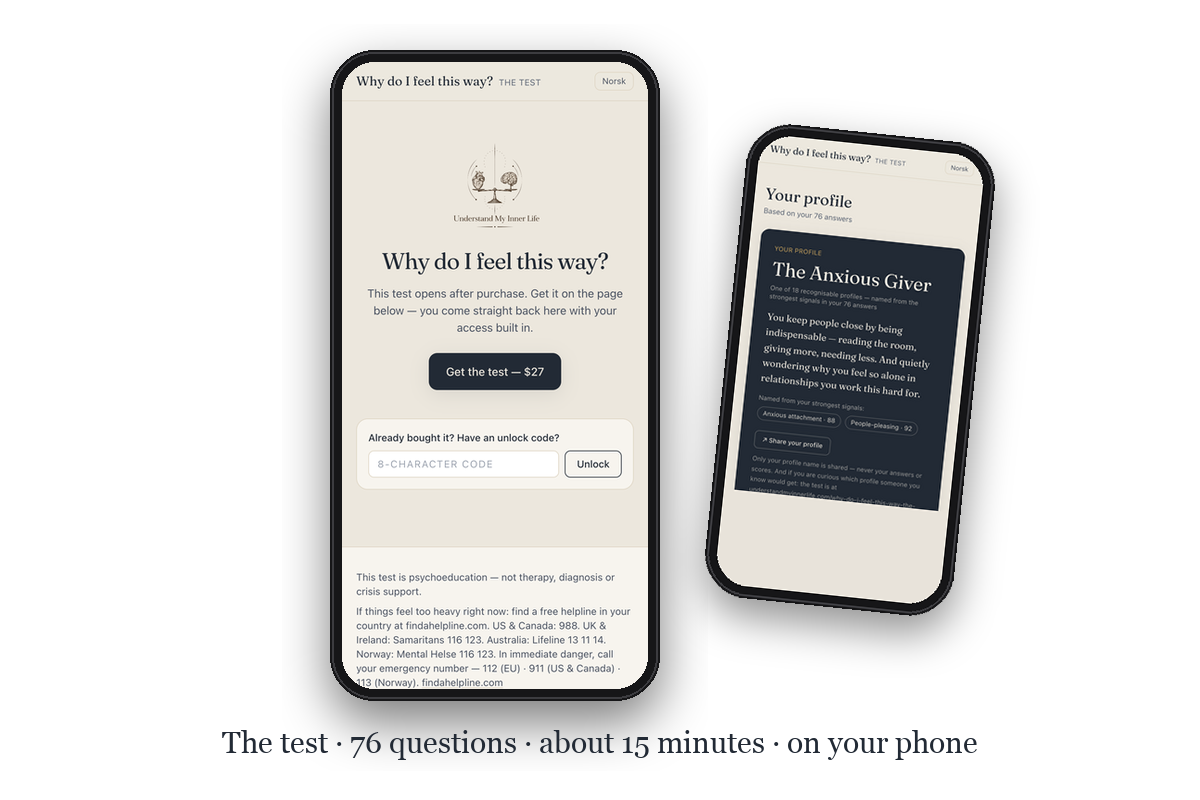
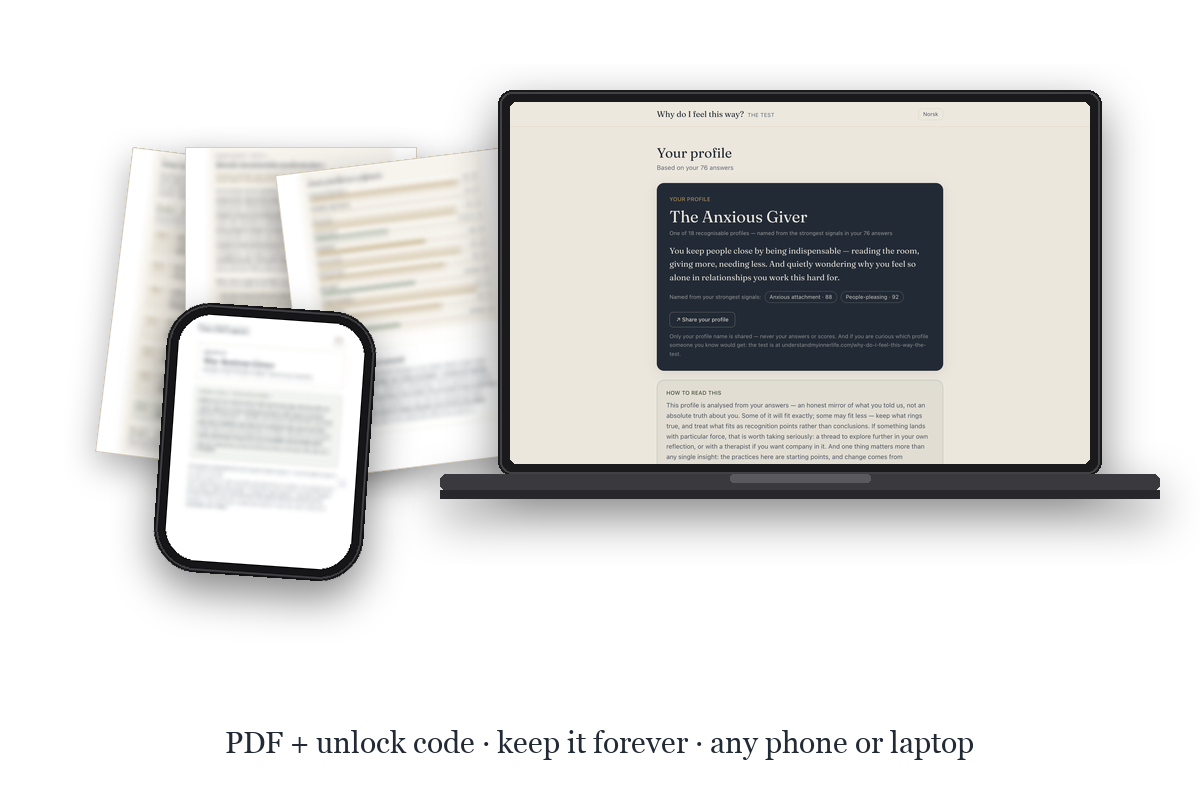
Want to find out why you feel this way?
The 15-minute assessment is $27, paid up front. It names your pattern and shows you exactly where to begin.
INTERNATIONAL RESOURCES
NHS (UK), a plain-language overview of ADHD in children and adults, how it is assessed and treated.
NIMH (US), the National Institute of Mental Health on ADHD: signs, treatment and how to find help.
CHADD (US), a non-profit with guides, support groups and a directory of professionals.
findahelpline.com, free, confidential helplines listed by country, if you need to talk to someone today.
WHEN THE HARD PART IS NOT THE INFORMATION
It is rarely the not knowing. It is what the years of not managing did to how you see yourself.
Lists, reminders and structure help, and most people with ADHD have already tried every one of them, which is exactly why the failing starts to feel personal: the reward signal that makes a task feel worth starting arrives unreliably, so effort does not turn into follow-through the way it does for other people, and after enough years the brain stops filing that as a wiring difference and starts filing it as evidence about you. You are the person who delivers eventually, the one everybody counts on to find a way, and you are also the only one who knows what it costs to be that person. The Secrets of the Brain is where that mechanism is laid out plainly, what attention is actually doing, where the commentary came from, and what a brain that learned one thing can learn instead, written out of 8 years and 4,500 clinical hours with people who had already tried every list.
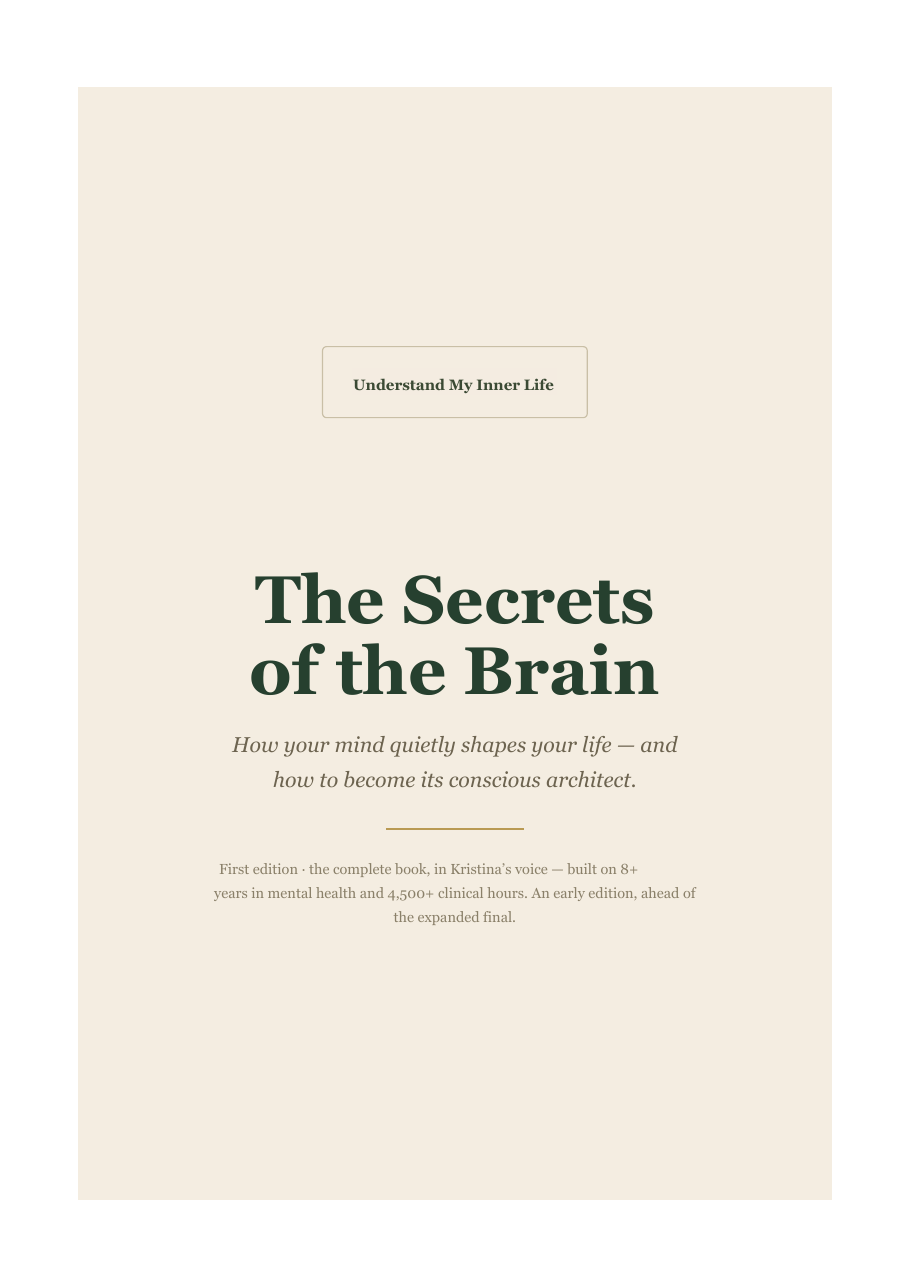
WHAT IS INSIDE
14 chapters, 57 pages. Four movements, from the first pattern to daily practice.
Every chapter moves from a moment you will recognise, to the science of why, to one practice you can use.
Foreword and a full reference list at the back.
Instant PDF download. Yours to keep.
The Secrets of the Brain · $47 · one-time payment · instant access. Education, not a substitute for assessment or treatment.