
Why I Built This, and the 4,500 Hours Behind It
Eight years in healthcare. 4,500+ clinical hours across ten institutions, including acute psychiatry in Norwegian public mental health care. Graduate training in clinical psychology (MSc, in progress) at Aarhus University. Everything on this site is here to help you. It is built on what I saw actually help people on the ward, written in plain words so you can use it at home tonight.
4,500+
Clinical Hours
8+
Years in Healthcare
Age 19
Youngest hired on the team
From our podcast
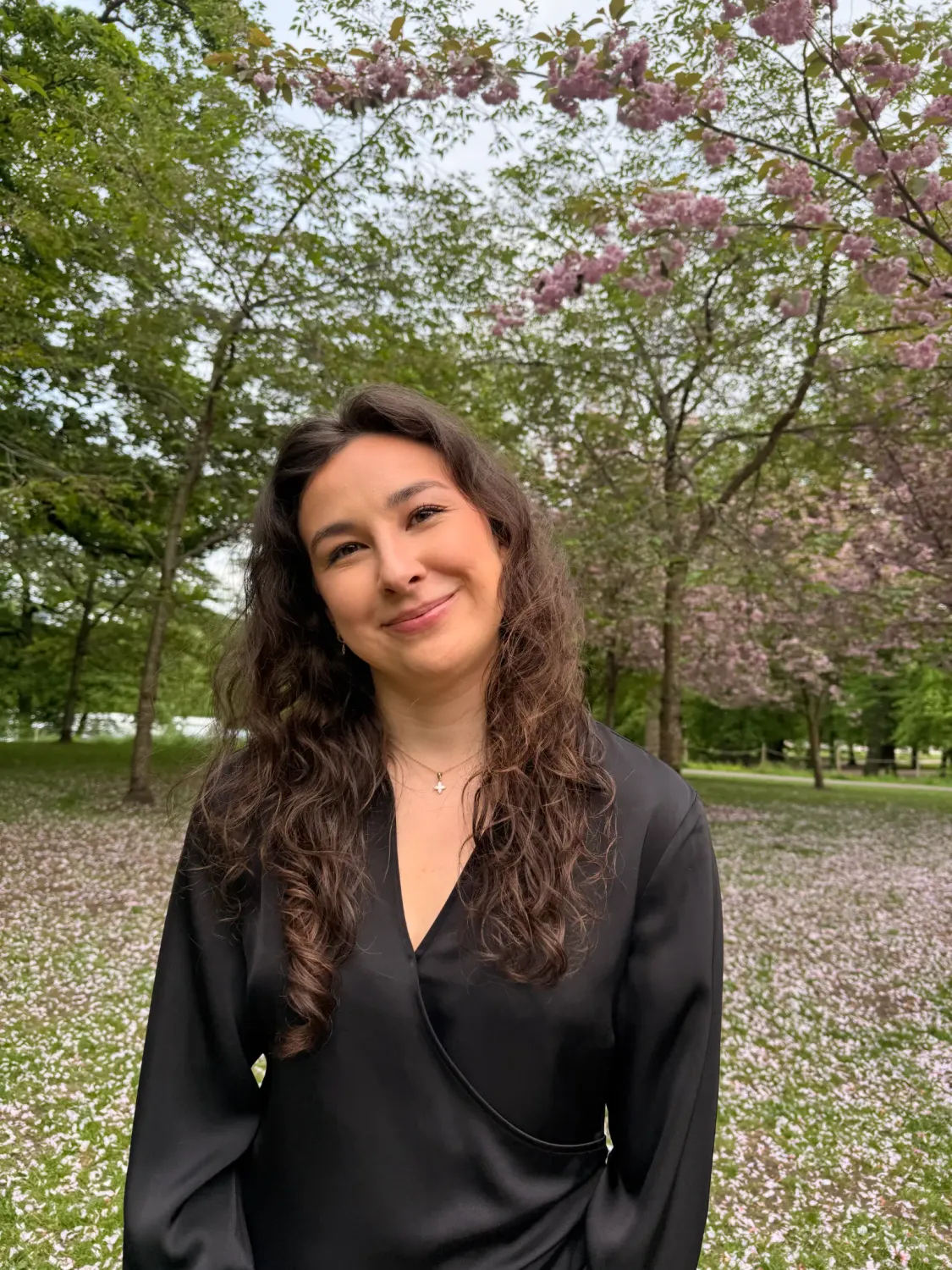
The person behind this platform
Ronny and I study clinical psychology together in Aarhus. This autumn we started a podcast in Norwegian, Psykt sårbart. In the first episode we talked about why we chose this work.
Here are three minutes of it, with English subtitles. It starts at the nursing home where I worked when I was 16, and ends with a moment I still think about almost every day.
Episode 1 of Psykt sårbart. In Norwegian, with English subtitles.
Short clips from the podcast and from my work are on Instagram: @understandmyinnerlife. All episodes: the podcast page.
The system sees you. Then it sends you home without the tools.
“I watched people fall through the same gap, again and again, seen by the system, then sent home too early with a diagnosis but none of the tools to live with it.”
Kristina
The working alliance, whether a person feels understood and is working on something they recognise, is one of the most consistent predictors of whether treatment helps. Two things influence whether anyone can use what they are told: language for their own reactions, and an understanding of how body, emotion and thought effect each other. Without them you can leave an appointment with a diagnosis and still not know what to do on a Tuesday evening. With them, a reaction stops being evidence that something is wrong with you and becomes something you can work on.
I have worked in healthcare since I was 16. At upper secondary school I took HYSK, healthcare certification and full science qualifications in the same programme, a seven-year course load completed in four, with 440 days of clinical placement. I applied for a placement in mental health care myself, and at 19 I was hired into Norwegian public mental health care: the youngest person they had taken on.
Across ten institutions I completed 3,300 hours of clinical placement, and around 1,300 further hours on an inpatient psychiatric unit, more than 4,500 clinical hours in total, across eight years in healthcare.
Those ten institutions cover psychiatric supported housing for adults with paranoid schizophrenia, home-based services with up to 16 patients a day across two city districts, a residential unit for adults with severe disability and epilepsy, and acute and sub-acute inpatient care. The work itself: observation, documentation, one-to-one sessions following the treatment plan, interdisciplinary teams, internal teaching, and seminars in cognitive milieu therapy.
Clinical Experience
Norwegian public mental health care
- August 2021 Present | Specialized Healthcare Worker
I work directly with patients in the acute phase of mental illness, the first days and weeks after admission, and in the calmer phase that follows, on a 24-hour inpatient unit: continuous observation, one-to-one conversations following the treatment plan, and crisis management. Everything on this site was shaped by what I watched work there.
I have taken part in structured suicide risk assessments alongside a specialist psychologist, contributing milieu observations of how a person functions outside the consultation room.
The unit works within a cognitive milieu therapy framework. In practice that means structured observation and documentation, de-escalation by procedure, individual conversations following each patient's treatment plan, handover in interdisciplinary teams, and internal teaching and seminars in cognitive milieu therapy.
Since August 2021 I have also held one-to-one conversations under supervision, following each patient’s treatment plan and in close collaboration with psychologists and psychiatrists. The aim was the same as on this site: that the person leaves with words for what is happening and one thing to do. The work spans depression, eating disorders, anxiety disorders, bipolar disorder, substance use, psychosis, PTSD, autism and personality disorders.
Eating Disorders (Anorexia Nervosa)
Primary contact responsibility in the treatment of anorexia nervosa. On a Norwegian inpatient unit, primary contact is a named role: one member of staff holds continuity for a patient's course of treatment: meal support, structured follow-up against the treatment plan, daily documentation, and reporting into the interdisciplinary team.
Acute Crisis & Trauma
Acute and sub-acute admissions, including night shifts. The work is de-escalation by procedure, continuous observation and documentation of symptom development, and participation in structured suicide risk assessments alongside a specialist psychologist.
Anxiety & Exposure Therapy
Exposure with response prevention (ERP) for obsessive-compulsive disorder, and graded exposure for social anxiety: building the exposure hierarchy with the patient, then working through it step by step. ERP is the first-line psychological treatment for OCD in current clinical guidelines. The work is behavioural, repeated, timed, and checked against what the patient predicted would happen.
- Depression & hopelessness
Inpatient work with severe depression: behavioural activation, structured daily routines, milieu observation on day and night shifts, documentation of symptom development, and one-to-one conversations following the treatment plan.
Residential Care Service
May 2021 July 2021 | Environmental Therapist Apprentice
Worked within a 24/7 residential care for adults with developmental disabilities and chronic neurological conditions, particularly epilepsy. This experience taught me to understand regulation as an interaction and made me early aware of the importance of pacing and respect for autonomy, even in situations where verbal communication is absent.
Municipal Home Health Services
August 2020 May 2021 | Healthcare Apprentice
Provided professional home-based care to 12, 16 patients daily, including wound care, medication distribution, compression therapy, and social support. This role developed my ability to maintain structure, prioritization skills, and clinical judgment under time pressure.
Psychiatric Care Home
August 2019 December 2020 | Health & Social Care Student
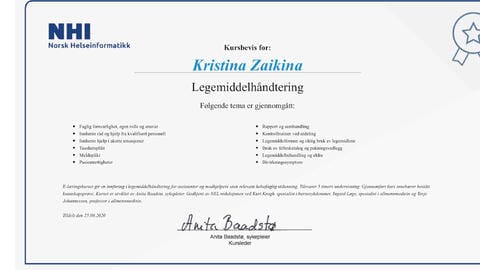
100 days of placement completed here at age 16, including a certified course in medication handling (medicines, substance use and psychiatry).
Supported adults with paranoid schizophrenia using environmental therapeutic strategies in a fully staffed 24-hour setting. Worked closely with patients experiencing hallucinations and delusions, learning how consistent measures can contribute to stabilization and increased mastery of symptom pressure. This gave me early insight into psychosis, reality breaks, mistrust, and the importance of stable relationships over time.
Nursing Home
August 2018 December 2019 | Health & Social Care Student
Provided person-centred care for older people with dementia and physical disabilities: mobility, hygiene, meals and environmental therapy, in a way that kept their dignity intact. It is where I learned that pace and respect are part of the treatment, not extras.
What the work has required
Psychiatry has required me to stay steady in situations that are not, and to keep my own reactions separate from what the person in front of me needs. I have worked on that deliberately on the unit, because it is the one skill everything else depends on.
One situation, told the way I was taught to document it. Situation: a patient, after a distressing event, was in panic and had seriously self-harmed; I was the only member of staff present. Task: keep the patient safe, follow procedure, prevent escalation. Action: verbal regulation and de-escalation first, then moving the patient to a quiet, screened room, continuous observation, structured handover. Result: my unit leader’s written assessment was that the handling was professionally grounded and very good. What it shows: I stay steady when the situation is not, and I write down what I see the same day.
Patients have told me they felt met as a person rather than as a diagnosis. Several have said that I can tolerate strong feelings, that I do not withdraw when a conversation becomes demanding. Some described putting words to something for the first time, and that this made the shame smaller and their own situation easier to understand, because the alliance felt safe enough.
When I moved into an extra-shift arrangement, leadership highlighted my independence and my sensitivity to rapid changes in a patient’s mood. On night shifts I have carried responsibility for catching the first signs that a patient’s mood is turning, particularly early hypomania in bipolar disorder. For you: it is the same habit of noticing small changes early that runs through everything here.
What that means for you: I can stay with a feeling that is hard to look at, without rushing you past it or making it bigger than it is. I explain the mechanism in plain words, then give you one thing to do. That is the standard every course, test and video here is held to.
What I learned in the gap between what people needed and what there was time for
Public mental health care is built by people who care, working inside limits nobody in the room chose. What I saw was not indifference. It was arithmetic: more people than there were hours.
So I learned to work in the minutes I had. How to make a five-minute conversation land. How to explain a panic response in plain language while walking down a corridor. How to leave someone with one thing they could use that evening, instead of a plan that needed a week.
The constraint stripped away everything that sounded good but did not help. This is built on what I saw help, and on what people told me afterwards they could actually use on their own.
Education & Qualifications
Bachelor's Thesis:
"Mismatch Negativity and the Ketamine Model of Psychosis"
My thesis asked a simple question: when healthy adults are given a low dose of ketamine, does their brain stop reacting to unexpected sounds in the same way it does in psychosis? That brain response is called mismatch negativity, and it is one of the most stable findings in schizophrenia research. I reviewed the studies systematically to see how well the drug model mirrors the real condition. Why it matters to you: when a symptom can be traced to something measurable in the brain, it stops being a character flaw and becomes a mechanism. That is the same shift every page on this site is trying to give you.
Research assistant, Aarhus University (2026):
Alongside the master’s, I screen research articles for a systematic review and meta-analysis at the Department of Clinical Medicine: whether blinding of patients and surgeons changes the effects we measure in placebo-surgery trials. Over 3,500 articles in the first weeks, against a 20-page manual.
Why it matters to you: it is the same discipline every page here is built on. Read the source, check the claim, keep only what holds up.
Bachelor in Psychology & Mental Health
Kristiania University of Applied Sciences | 2023, 2026
Comprehensive undergraduate degree covering core areas of psychology. I switched from Applied Psychology to Psychology and Mental Health to gain deeper theoretical immersion in psychopathology and research theory.
Weighted grade average: 4.6 / 5.0 across 150 ECTS. My areas of depth are Abnormal Psychology (15 ECTS), Positive Psychology and Quality of Life (15 ECTS), and a substantial research methods and statistical analysis track, carried through to the bachelor’s thesis.
Key Subjects Completed:
Abnormal Psychology (15 ECTS)
Biological Psychology & Behaviour (10 ECTS)
Cognitive Psychology (10 ECTS)
Developmental Psychology: Difficulties in Children and Youth (10 ECTS)
Social Psychology (10 ECTS)
Personality Psychology (10 ECTS)
Introduction to Research Methods & Statistics (20 ECTS)
Introduction to Psychology (Cognition, Behavior, Emotion, Relation)
Quantitative & Qualitative Methods (10 ECTS)
Work & Organizational Psychology (10 ECTS)
Educational Psychology (10 ECTS)
Positive Psychology & Quality of Life (15 ECTS)
Statistical Analysis (10 ECTS)
Bachelor’s Thesis in Psychology (20 ECTS)
HYSK (Health & Science Track)
Kuben Upper Secondary School | 2018, 2022
A rigorous 4-year program combining healthcare certification with full STEM subjects (Math R1/R2, Physics, Chemistry). Completed 440 days of clinical placement across hospital and community care.
Qualifications Obtained:
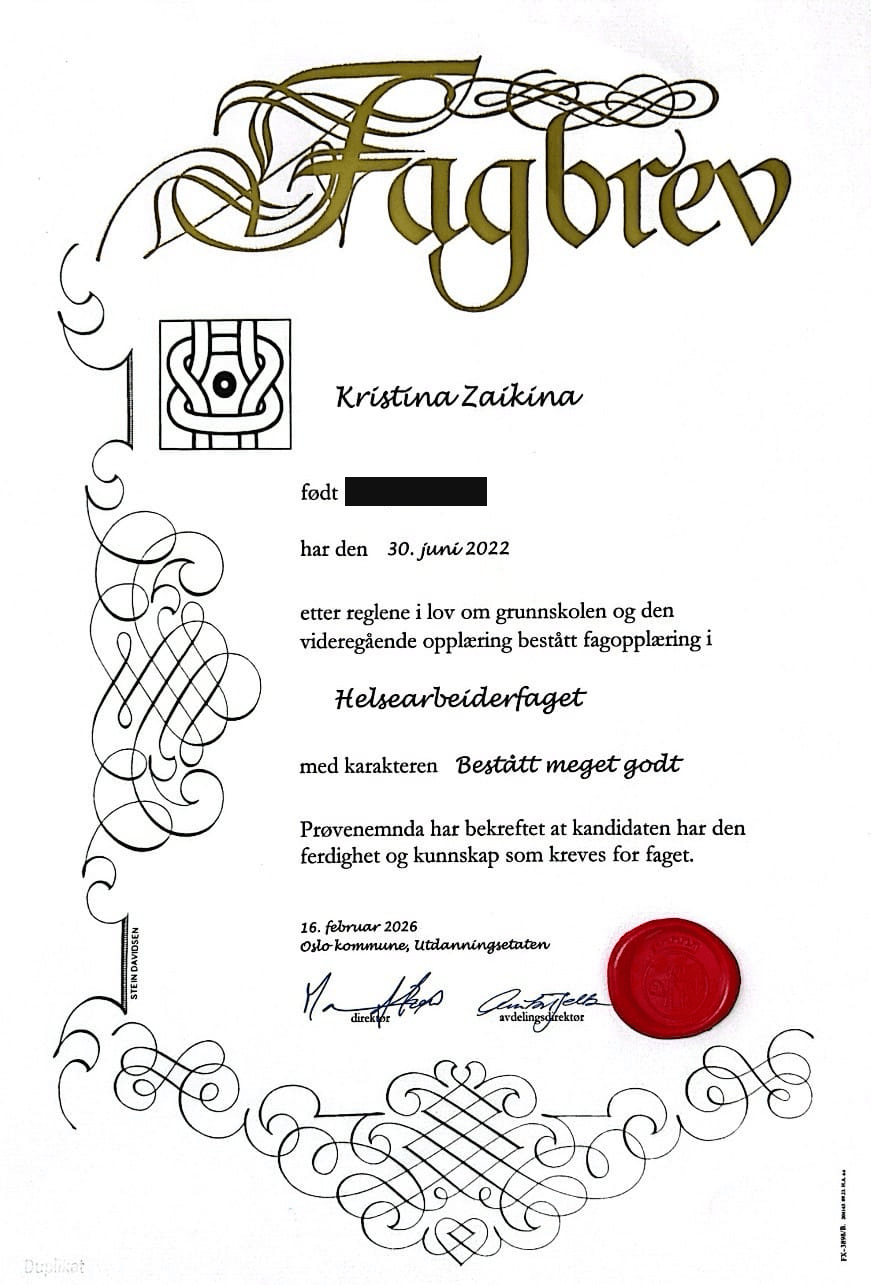
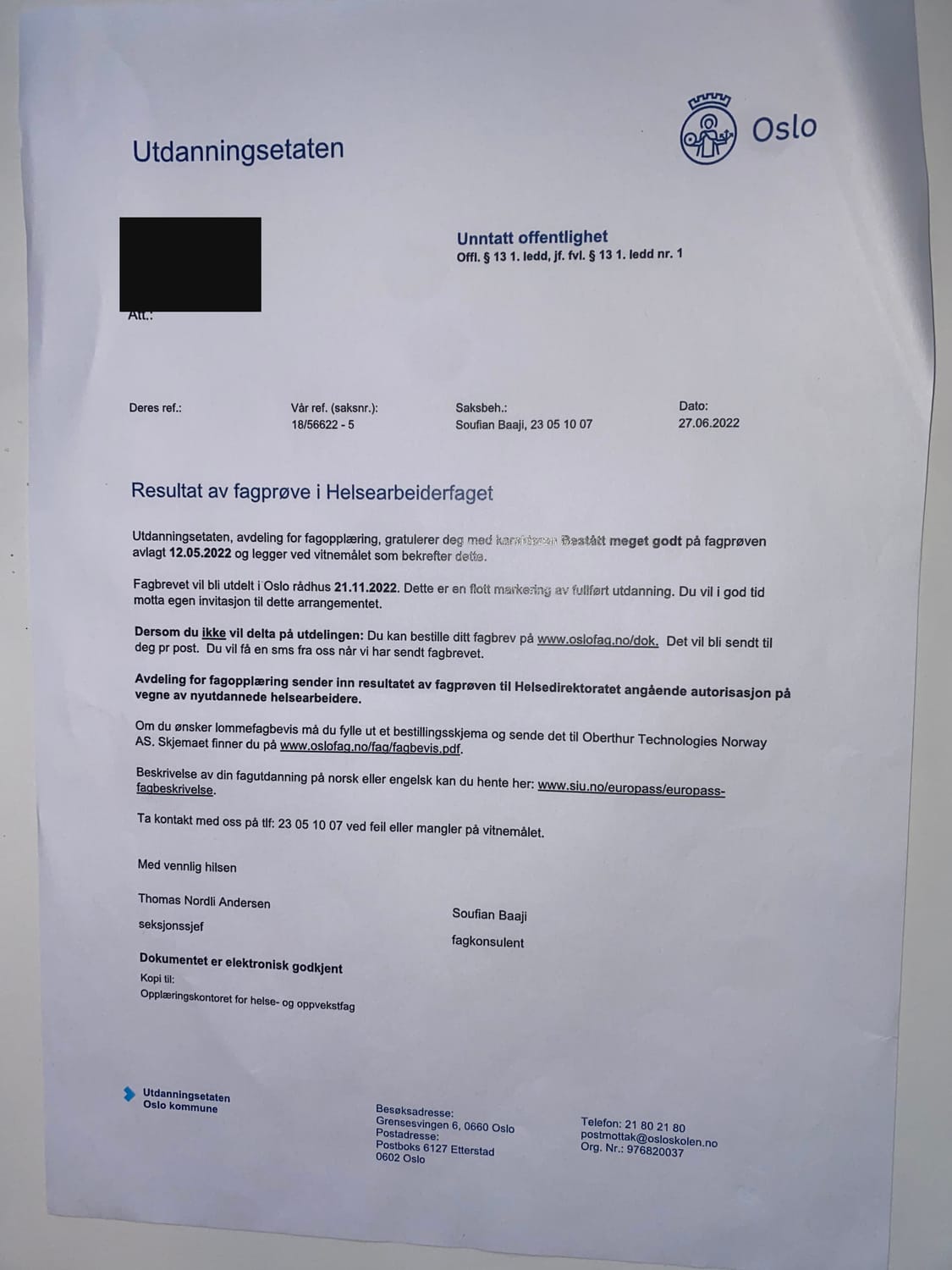
Certified Healthcare Professional (Helsefagarbeider)
University Entrance Qualifications (Real-fagskompetanse)
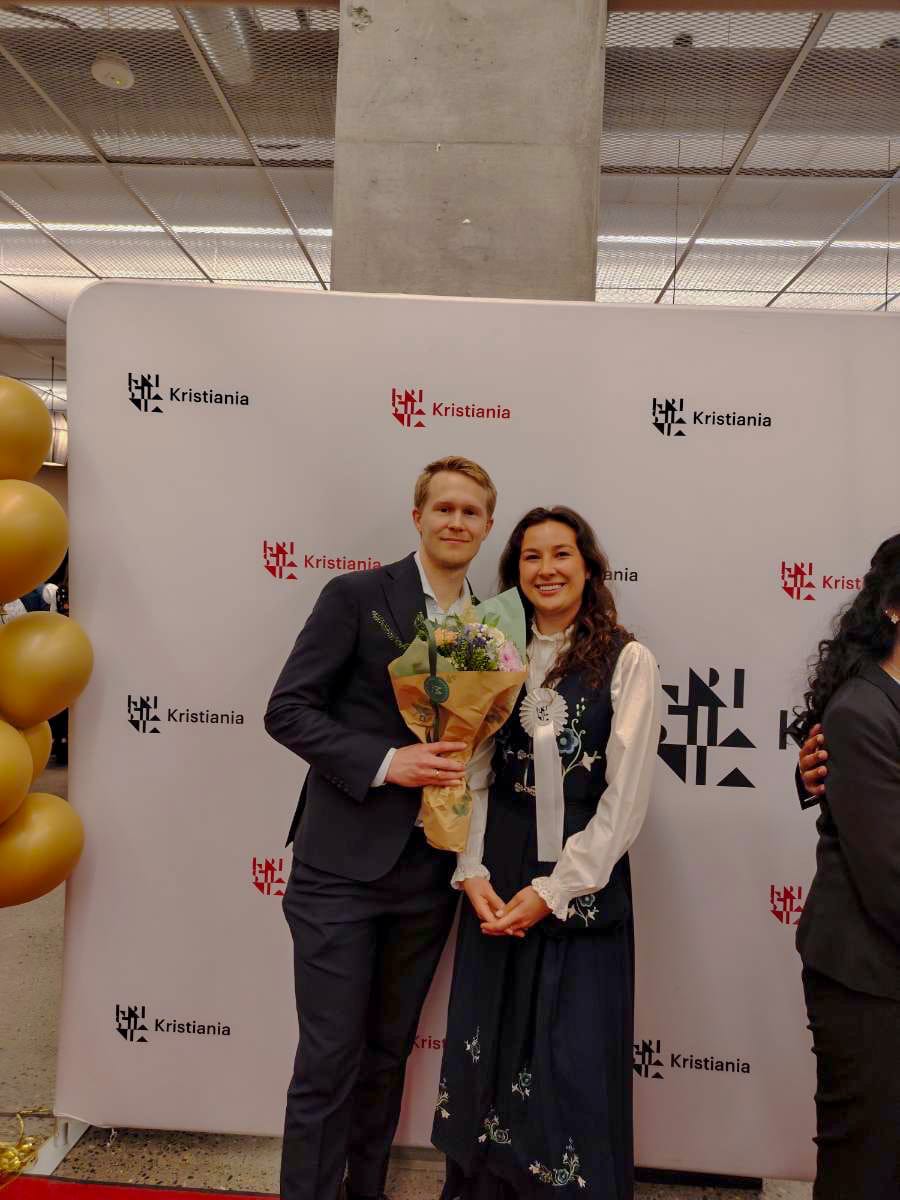
Associate Professor Henrik Herrebrøden
Certifications & Diplomas
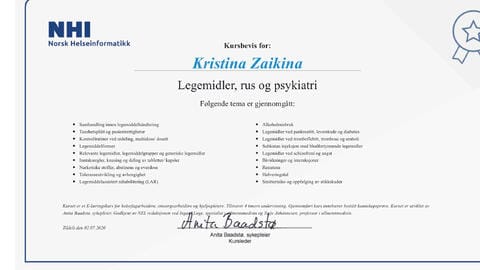
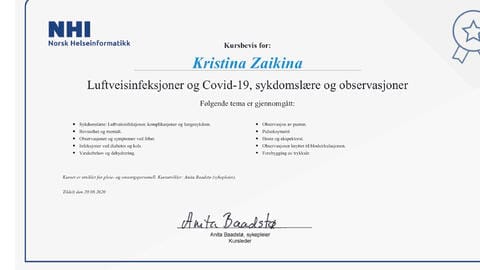
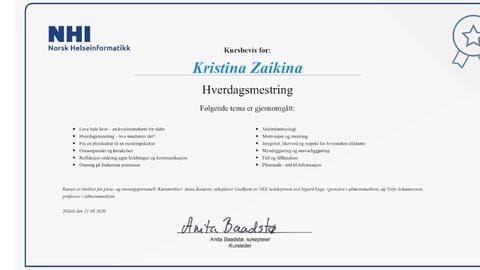
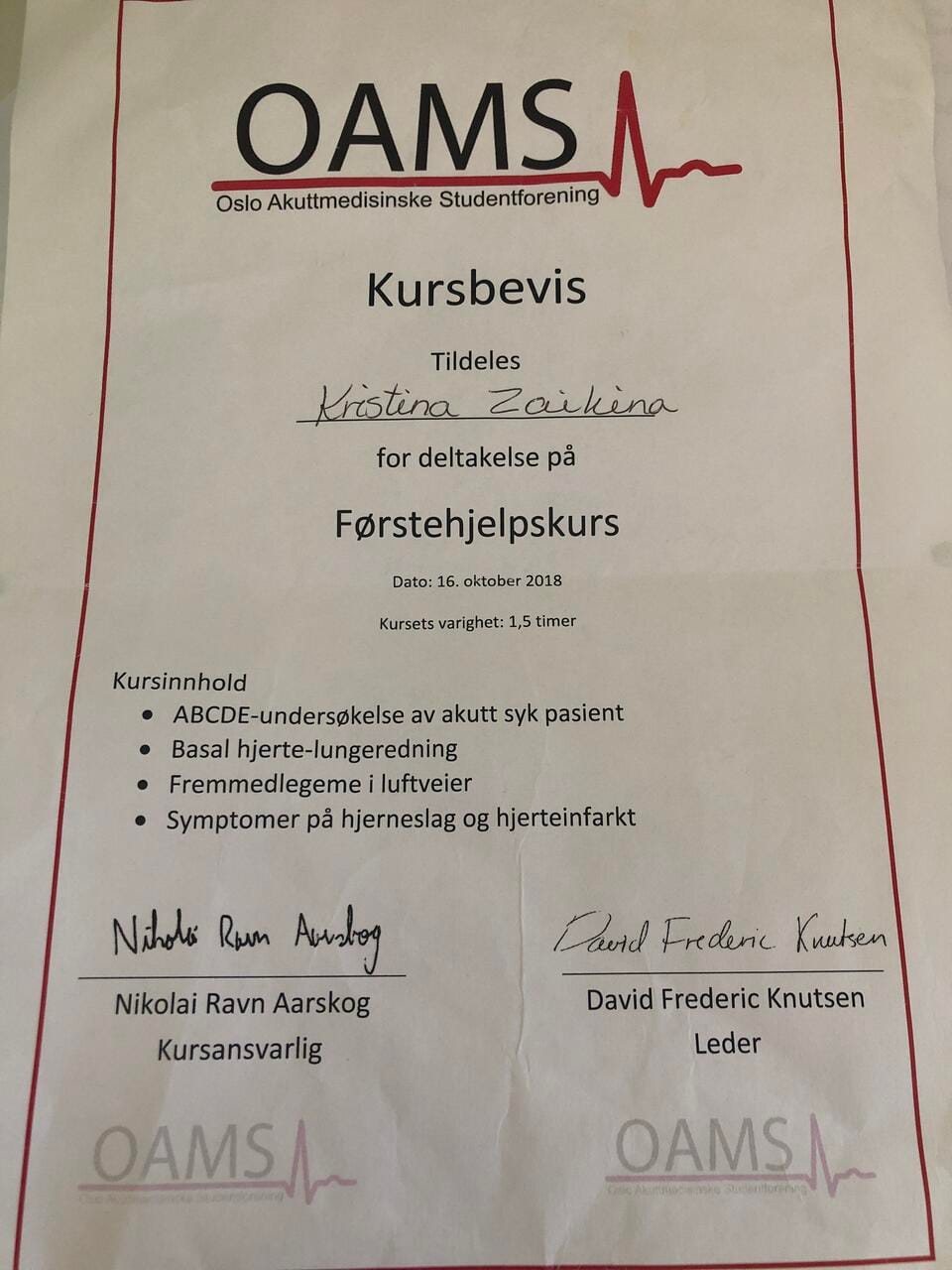
Professional courses completed through Norwegian public mental health care and NHI, including clinical documentation systems, coercion and human rights in mental health care, and confidentiality and data protection.
Beyond the Clinic
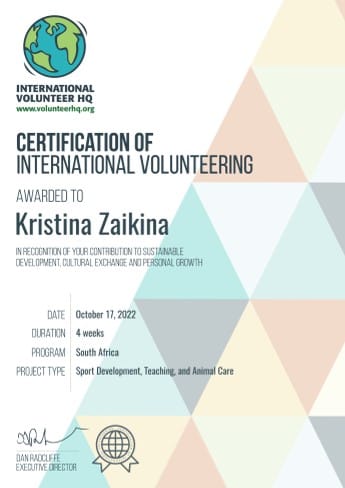
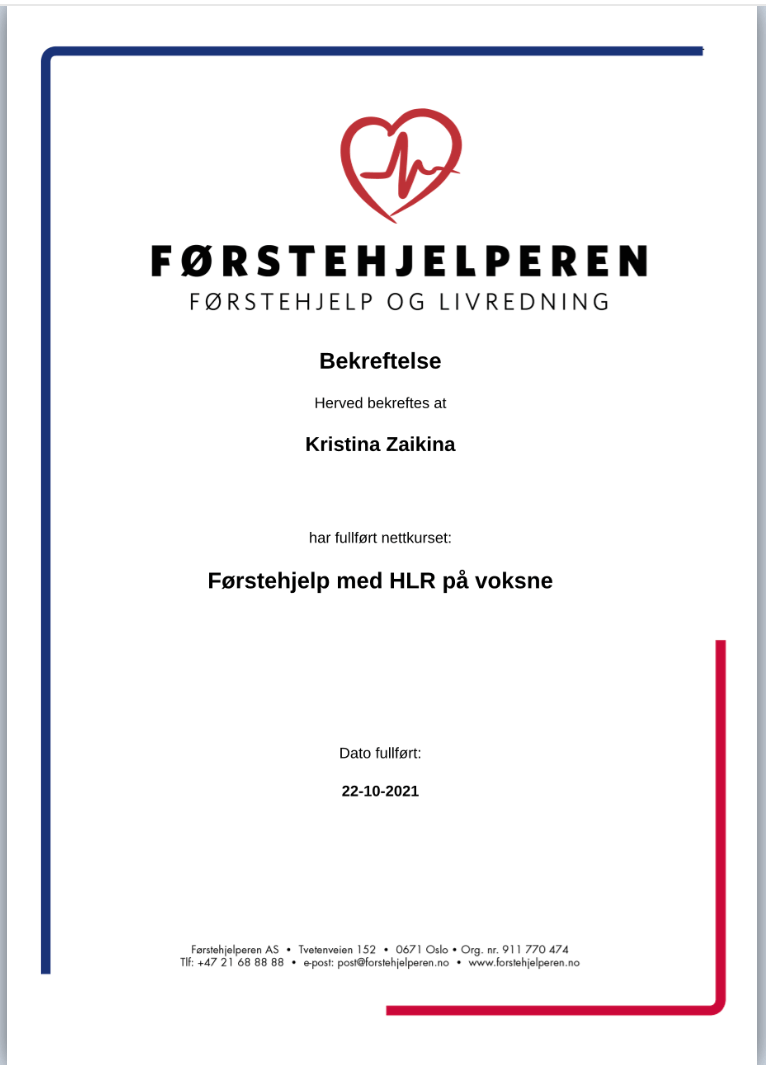
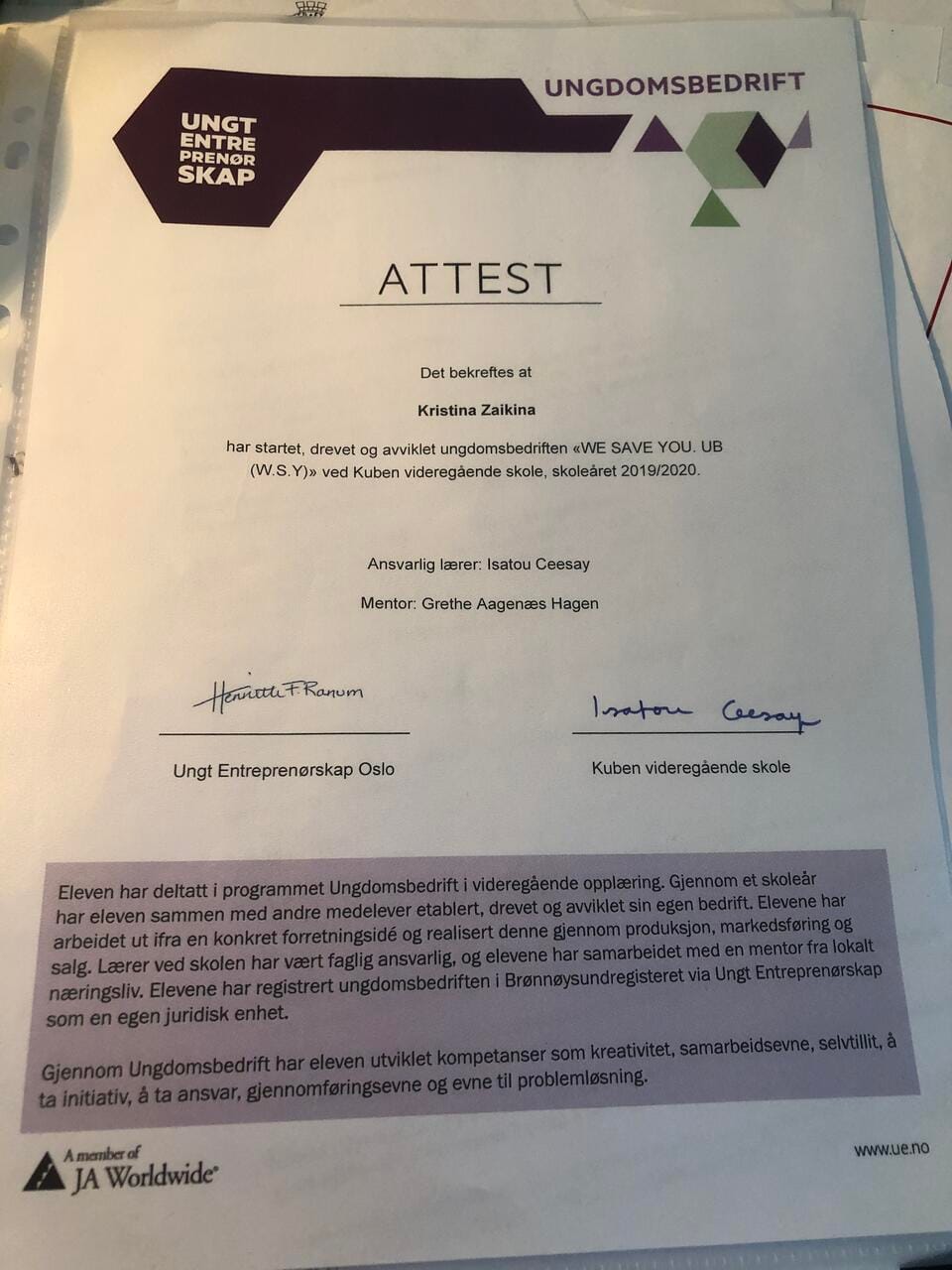
Alongside the clinical work: volunteer swimming coach and interpreter for 30 Ukrainian refugee children, the only Russian speaker on the team, responsible for communication and structure. I am certified in first aid and adult CPR, and I have taught first-aid courses to school classes and to workplaces outside school through the youth enterprise I ran.
Languages: Norwegian (native), English (full professional proficiency), Russian. I also read 120 psychology books in four months and kept only what held up against the research; that reading is the backbone of the courses here. From October 2026 I also co-host a Norwegian podcast on mental health with psychology student Ronny Stavenes, on YouTube and Spotify.
Professional Background
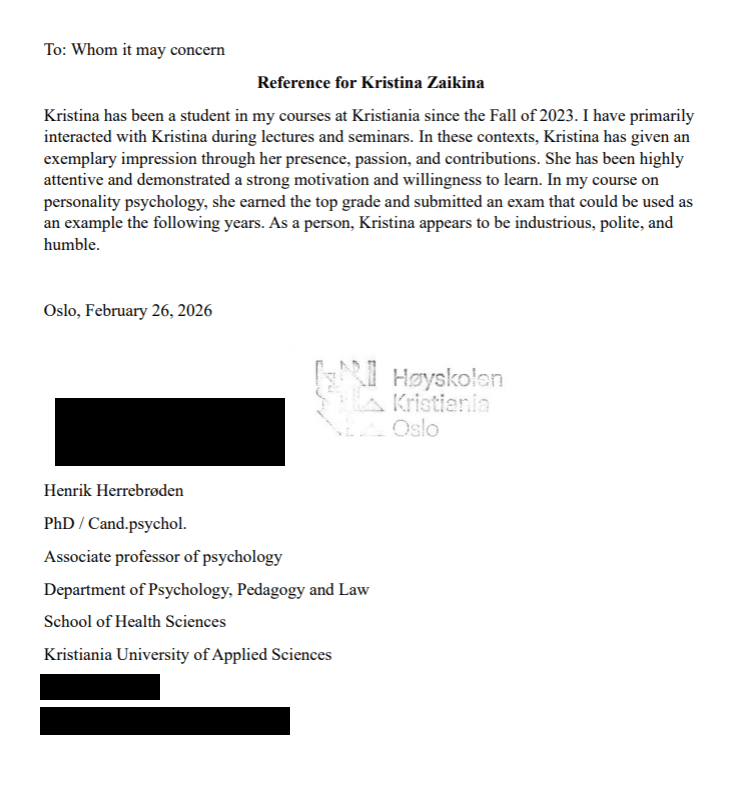
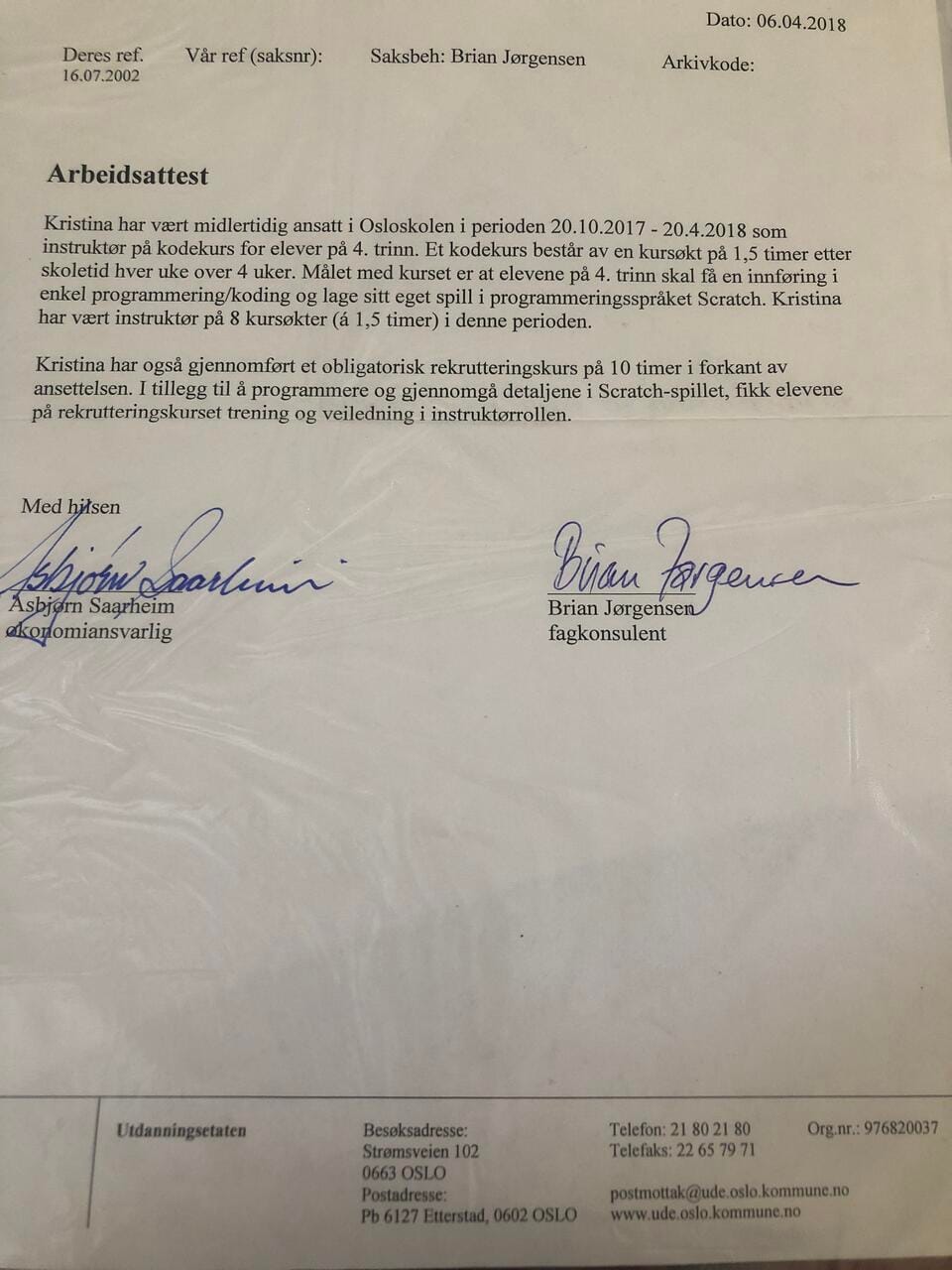
Official reference letters from Kristina’s employers and academic institutions. Personal contact details have been redacted.
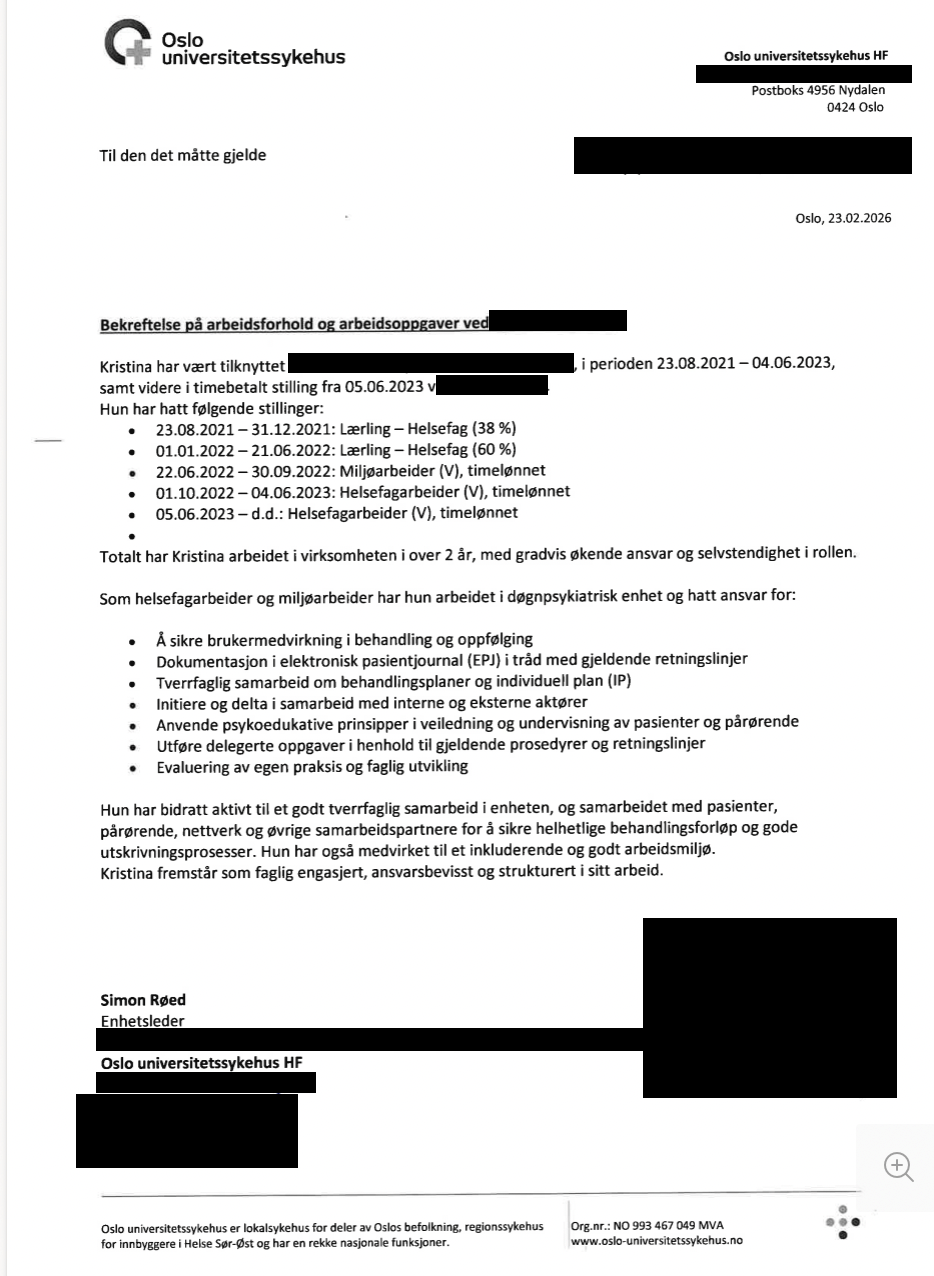
Simon Røed
Unit Leader
Norwegian public mental health care
“She has contributed actively to good interdisciplinary cooperation in the unit, and worked with patients, relatives and other partners to ensure coherent treatment pathways and good discharge processes.”
Confirmation of employment and responsibilities
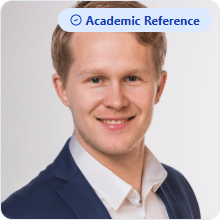
Henrik Herrebrøden
PhD, Cand.psychol., Associate Professor of Psychology
Kristiania University of Applied Sciences
“Kristina has given an exemplary impression through her presence, passion, and contributions. She has been highly attentive and demonstrated a strong motivation and willingness to learn. In my course on personality psychology, she earned the top grade and submitted an exam that could be used as an example the following years. As a person, Kristina appears to be industrious, polite, and humble.”
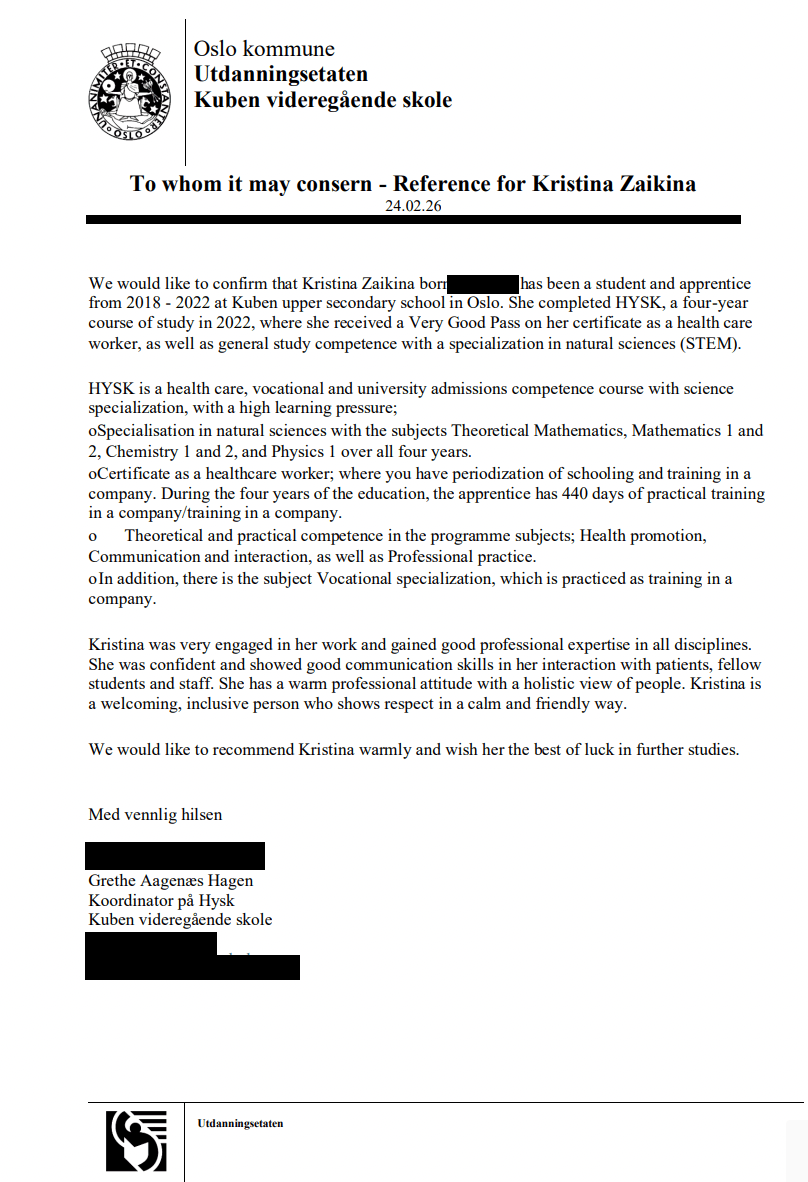
Grethe Aagenæs Hagen
Coordinator, HYSK
Kuben Upper Secondary School
“Kristina was very engaged in her work and gained good professional expertise in all disciplines. She was confident and showed good communication skills in her interaction with patients, fellow students and staff. She has a warm professional attitude with a holistic view of people. Kristina is a welcoming, inclusive person who shows respect in a calm and friendly way.”
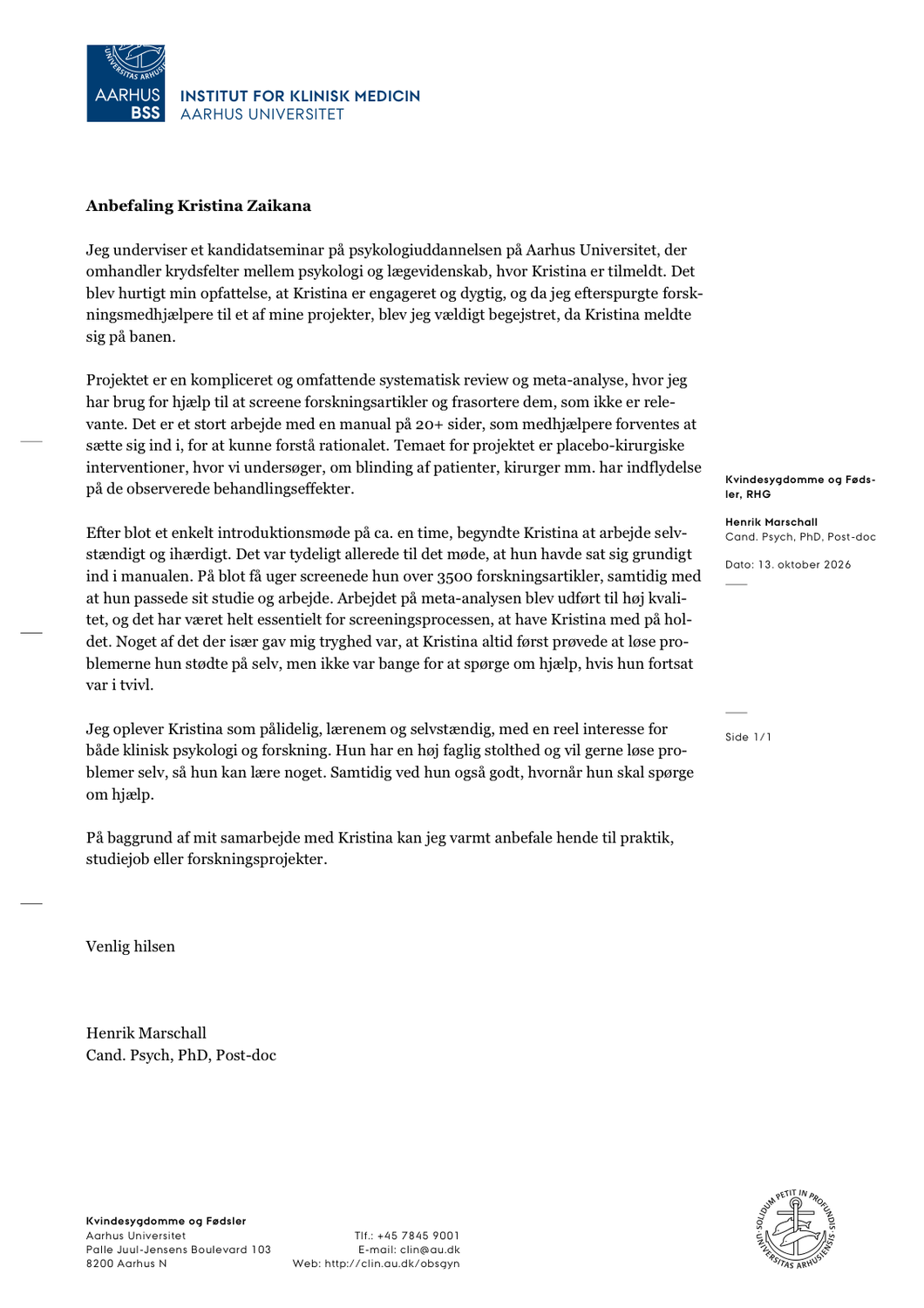
Henrik Marschall
Cand.psychol., PhD, Postdoc
Department of Clinical Medicine, Aarhus University
“After a single one-hour introduction, Kristina began working independently and persistently. In just a few weeks she screened over 3,500 research articles, alongside her studies and her job, to a high standard. I experience Kristina as reliable, quick to learn and independent, with a genuine interest in both clinical psychology and research. I can warmly recommend her for placements, student jobs or research projects.” (translated from Danish, 13.10.2026)
The story behind these documents
The work certificate from the municipal school service (2017, 2018) is where it started. I was one of Norway’s first coding instructors for fourth-graders, teaching Scratch: eight courses, an hour and a half a week, four weeks each, after the mandatory ten-hour instructor training. I was still in lower secondary myself. NRK Super’s news programme Supernytt covered the initiative.
Other experience
At upper secondary I founded and ran the youth enterprise “WE SAVE YOU. UB” (Ungt Entreprenørskap, 2019, 2020): taking a business idea through production, marketing and sales, and running first-aid courses for other classes and for workplaces outside school.
Alongside my studies I have worked for DataAnnotation, which is hands-on training in how digital resources and programmes are built and improved online. That experience feeds directly into how the courses and tools on this site are made.
The full record, with certificates: linkedin.com/in/kristina-zaikina
Ready to understand what's really happening?
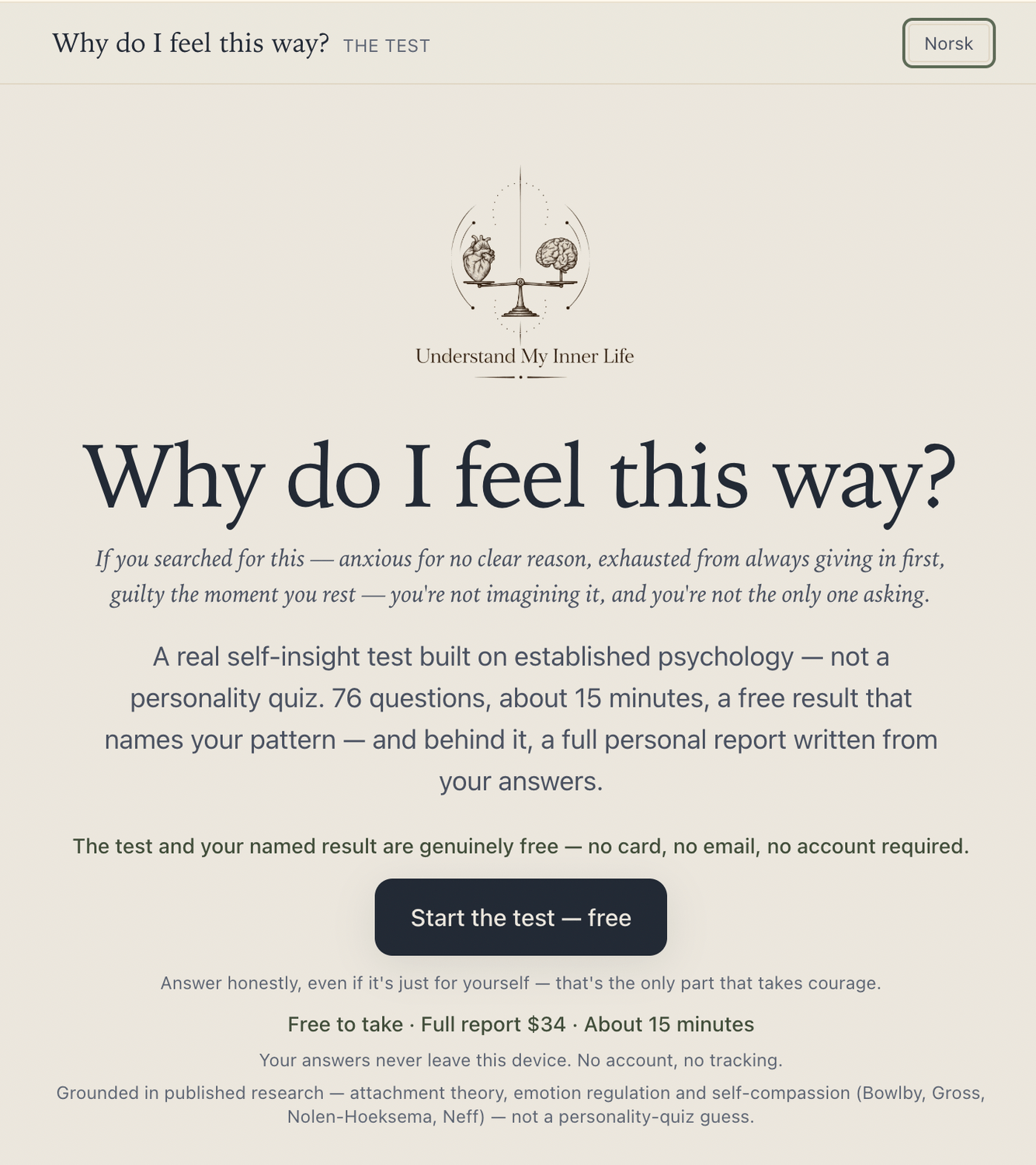
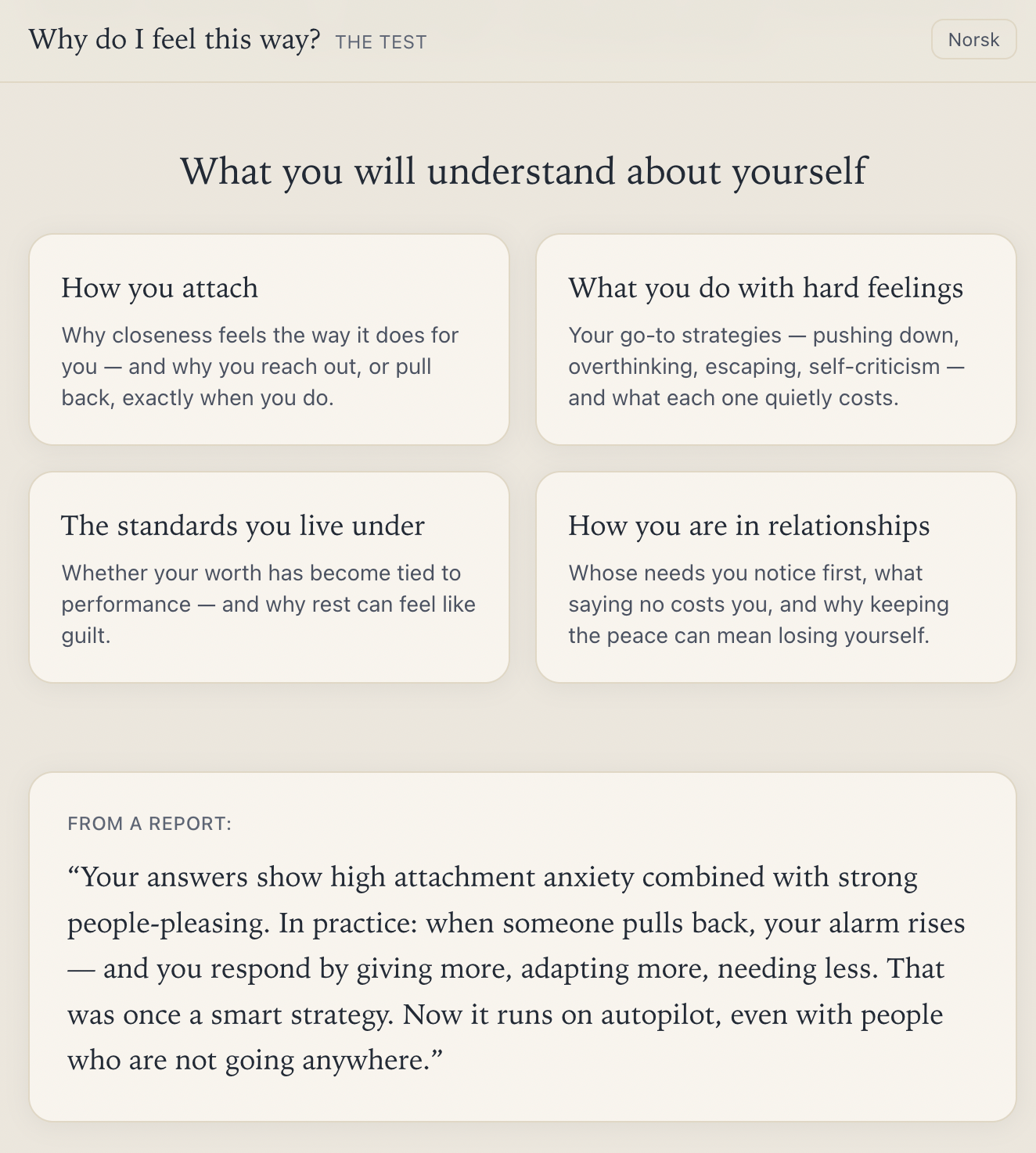
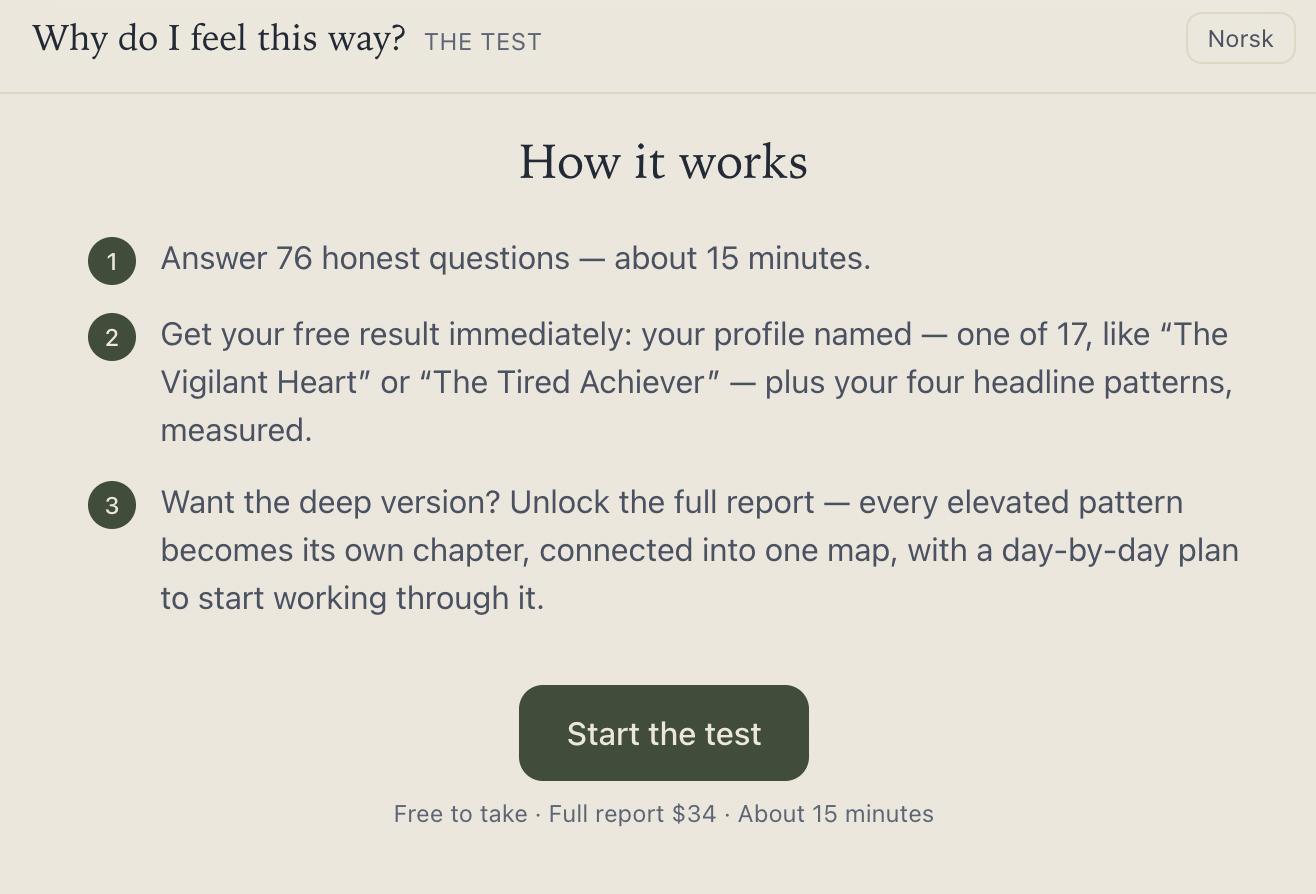
Start with the 15-minute test ($27). It names your pattern and shows you exactly where to begin.
Choose How Far You Want to Go
Every level includes lifetime access and builds on the one before it.
Start Here
Self-aware
$297 · Lifetime access
For you if this is your first time working with emotions systematically.
Module 1: Understanding Emotions (59 lessons · 5 complete parts)
Module 2: CBT, Thought Patterns
All exercises for Modules 1 and 2
Branching scenarios: anxiety, shame, anger, self-compassion
Name your stress response pattern before it takes over
Guided video practices
Personal Regulation Manual (Part 1)
Downloadable workbooks
Lifetime access
Modules 1 and 2
One-time payment
Lifetime access
Your price: $297
Modules 1 to 3
Regulated
$597 · Lifetime access
For you if you understand yourself, but keep repeating the same patterns.
Everything in Self-Aware, plus:
Module 3: MCT, Thought Defusion Techniques
6 core defusion techniques + 3 additional
9 named inner voices framework
Recognise a rumination loop while inside it, and interrupt it
30-day personal practice plan
All exercises for Modules 1 to 3
Lifetime access + all future updates
Modules 1 to 3
One-time payment
Lifetime access
Your price: $597
Best Value
Transformed
$997 · Lifetime access
For you if you're ready to change how you show up in relationships, and integrate everything into your actual life.
Everything in Regulated, plus:
Module 4: Communication in Real Life
Box metaphor · boundaries · mentalizing · inference ladder · 4 attachment styles
Interactive scenarios: boundary-setting, family conflict, repair practice
Your Personal Regulation Manual: complete integration session
Three-part need sentence · one-sentence repair
Lifetime access + all future additions
Modules 1 to 4
One-time payment
Lifetime access
Your price: $997
Try before you commit
The free preview gives you access to real course content, so you can experience the method and decide with confidence. Because this is a digital product with instant lifetime access, purchases are final. We want you to buy only when you're ready.